







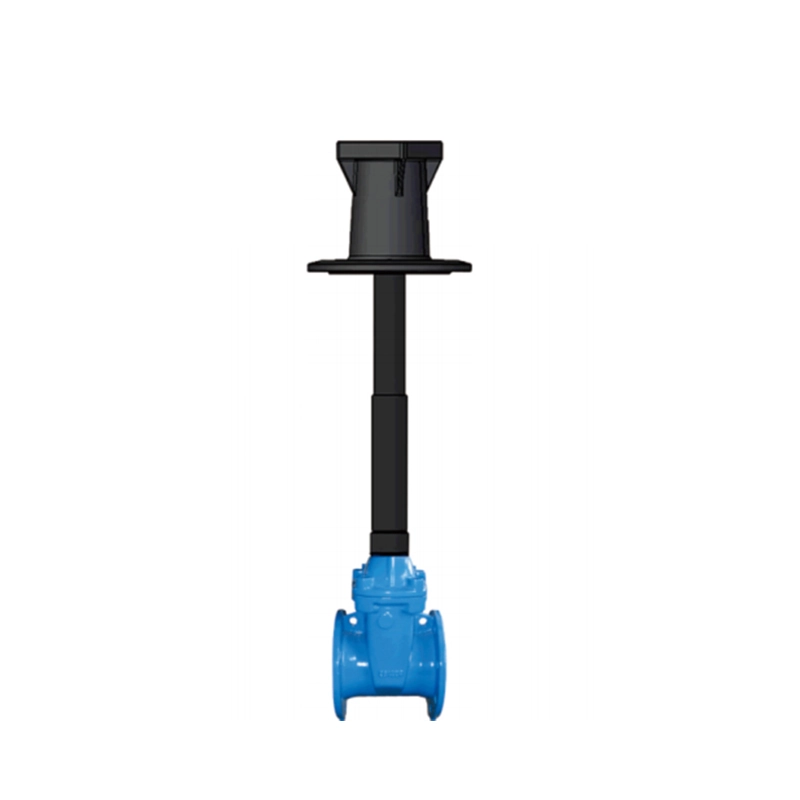
Buried Resilient Seat Gate Valve ZZ45X
Buried Resilient Seat Gate Valve ZZ45X Purpose
This valve is mounted on various underground pipelines and used as a bi-way closed circuit equipment for tap water. sewage treatment industries etc.
Buried Resilient Seat Gate Valve ZZ45X Definition and Components
What is a ZZ45X Valve?
The ZZ45X is a standardized designation for a Buried (Underground) Service, Non-Rising Stem, Resilient-Seated Gate Valve. The "ZZ" prefix specifically indicates a valve designed for direct burial in municipal water systems, distinguishing it from above-ground models. It features a non-rising stem and a square operating nut accessible from the surface via a valve box.
Main Parts:
- Valve Body: Heavy-duty ductile iron casting with flanged or Mechanical Joint (MJ) ends. Designed to withstand burial loads and soil pressure.
- Buried Service Bonnet: A sealed, extended bonnet that protects the internal echanism from soil infiltration and groundwater.
- Non-Rising Stem (NRS): The stem rotates but does not move upward, keeping the operating mechanism compact below ground.
- Square Operating Nut: A 2-inch square nut attached to the top of the stem, designed to be turned with a T-key wrench from the street surface.
- Stem Extension Assembly: Adjustable threaded rods that connect the operating nut (at grade level) to the actual valve stem, accommodating different burial depths.
- Resilient Gate: A ductile iron disc fully encapsulated in EPDM or NBR rubber for a bubble-tight seal.
- Corrosion Protection: A thick, durable external coating (typically Fusion-Bonded Epoxy per AWWA C550) and often an internal lining like cement-mortar or epoxy.
Role, Characteristics, and Application Scenarios of Buried Resilient Seat Gate Valve ZZ45X in Pipelines
Water Supply Valve Pipeline Functions:
- Subsurface Flow Isolation: Provides complete shut-off control on buried water mains from the street level without excavation.
- System Sectionalizing: Allows water utilities to isolate specific blocks or zones of the distribution network for maintenance, repair, or new connections.
- Emergency Control: Critical for stopping flow during main breaks.
Operational Features:
- Key-Operated Security: Requires a special T-handle wrench ("valve key"), preventing unauthorized operation.
- Space-Efficient Design: The non-rising stem requires minimal vertical space in the buried valve box.
- No Visual Position Indicator: The valve position (open/closed) must be determined by counting turns of the wrench or installing an optional indicator.
- Designed for Burial: Materials and coatings are selected specifically for long-term resistance to soil corrosion and electrolysis.
Gate Valve for Water Application Scenarios:
- This valve is a staple in public water distribution infrastructure.
- Street Main Valves: Installed at regular intervals (e.g., every 500-1000 ft) on primary and secondary water mains under roads.
- Branch Connection Valves: Used to isolate service lines to subdivisions, large buildings, or fire hydrant leads.
- Valve Chambers/Vaults: Installed in pre-cast concrete or brick chambers for easier access in deep or high-traffic areas.
Scenario Diagram (Text Description):
A municipal crew is repairing a broken 12-inch water main on a suburban street. Two ZZ45X valves, buried upstream and downstream of the break, control the incident. Each valve sits 5 feet deep, connected to the ductile iron pipe with MJ joints. Its operating nut rests at the correct grade level inside a cast iron valve box. A worker removes the box lid, inserts a long T-key, and turns the square nut to close the valves, isolating the damaged section. The crew can now safely excavate and repair the pipe. The valve's epoxy coating protects it from the surrounding soil, ensuring it will operate reliably for decades.
Buried Resilient Seat Gate Valve ZZ45X Standards: Materials, Design, and Connections
Material Standards:
- Body, Bonnet, Gate: Ductile Iron per ASTM A536 (65-45-12).
- Stem: Stainless Steel (Type 304 or 316 per ASTM A276).
- Coatings: External: Fusion-Bonded Epoxy (FBE) per AWWA C550. Internal: Often cement-mortar lining per AWWA C104 or FBE.
- Seal: EPDM rubber per NSF/ANSI 61 for potable water.
Design Standards:
- AWWA C509: The primary standard for Resilient-Seated Gate Valves for Water Supply Service. It governs design, performance, and testing.
- AWWA C550: Standard for Protective Interior and Exterior Coatings for Valves and Hydrants.
Connection Standards:
- Mechanical Joint (MJ): AWWA C111. The most common connection for buried ductile iron systems.
- Flanged: AWWA C115 for ductile iron flanges.
- Face-to-Face: Dimensions are per AWWA C509.
How to Select Buried Resilient Seat Gate Valve ZZ45X
Key Steps:
- Specify to AWWA Standards: Your core specification must be compliance with AWWA C509 and C550.
Define Critical Attributes Clearly:
- Connection: Specify MJ or flanged. If MJ, state the pipe class it must join to (e.g., Class 52).
- Coating System: Explicitly require external FBE coating per AWWA C550 (e.g., 16 mils nominal) and specify the internal lining.
- Operating Nut: Confirm size (typically 2" square).
- Burial Depth: Provide the required laying depth so the supplier can quote the correct stem extension length.
- Source from Waterworks Specialists: Prioritize manufacturers with a proven track record in AWWA infrastructure valves, not just general industrial fire protection system supplier.
- Review Accessories: Clarify if the price includes stem extensions, valve boxes, or setting blocks. These are often not included.
Pre-Shipment Inspection for Export Buried Resilient Seat Gate Valve ZZ45X and Key Considerations
Inspection Checklist:
- Coating Inspection: This is critical. Check FBE coating for proper thickness, adhesion (no peeling), and the absence of "holidays" (pinholes) using a holiday detector.
- Operational Test: Assemble stem extensions and use a T-key to operate the valve through several full cycles. It must turn smoothly.
- Dimensional Check: Verify face-to-face and end connection dimensions (MJ bell dimensions per AWWA C111).
- Pressure Testing: Witness hydrostatic tests per AWWA C509: Shell test at 300 psi, seat test at 150 psi with zero leakage allowed.
- Documentation: Ensure Material Test Certificates (for iron, stem, coating) and NSF 61 certificates for the seat are provided.
Export Precautions:
- Protect the Coating: The FBE coating is easily damaged by impact or scraping. Use padded blocking in wooden crates. Mark crates with "PROTECT COATING - DO NOT DROP."
- Protect Machined Surfaces: Coat the square operating nut and stem threads with heavy anti-corrosive grease. Cover MJ bell ends or flange faces with bolted plastic/metal covers, not just tape.
- Secure Internal Parts: Ensure the gate is secured in a partially open position to prevent the rubber seat from taking a compression set during long transit.
- Complete Documentation Pack: Include all test reports, material certs, coating certs, and a detailed installation manual in a waterproof pouch inside the shipping crate. This is essential for customs and the receiving inspector.
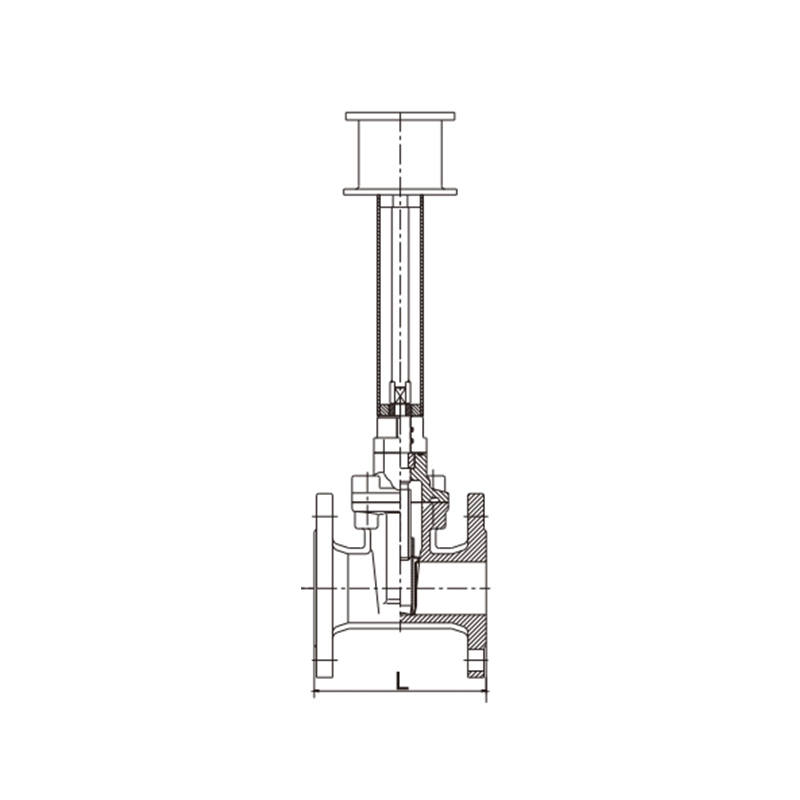
Buried Resilient Seat Gate Valve ZZ45X Main dimensions(mm)
| DN | 50 | 65 | 80 | 100 | 125 | 150 | 200 | 250 | 300 | 350 | 400 | 450 | 500 | 600 | |
| D | 180 | 180 | 230 | 230 | 280 | 280 | 330 | 380 | 380 | 380 | 480 | 480 | 600 | 600 | |
| L | GB | 178 | 190 | 203 | 229 | 254 | 267 | 292 | 330 | 356 | 381 | 406 | 432 | 457 | 508 |
| DIN | 150 | 170 | 180 | 190 | 200 | 210 | 230 | 250 | 270 | 290 | 310 | 330 | 350 | 390 | |
Note:1. Other specifications and flange standards are available upon request.
- Design and specifications are subject to change without prior notice.