







How to Test a Fire Valve: A Practical Guide for Reliable Fire Protection Systems
February 23, 2026
Fire valves are critical components in any fire protection system. They control, isolate, and regulate water flow to sprinklers, hydrants, and standpipe lines. If a fire valve fails, the entire system may fail when it is needed most.
Many system problems do not come from poor design. They come from valves that were never tested properly after installation or ignored during routine maintenance.
In this guide, fire protection system supplier explain how to test a fire valve step by step. This is based on field practice, inspection standards, and real issues found in projects across industrial sites, commercial buildings, and municipal fire systems in regions such as South America.
Why Fire Valve Testing Is Necessary
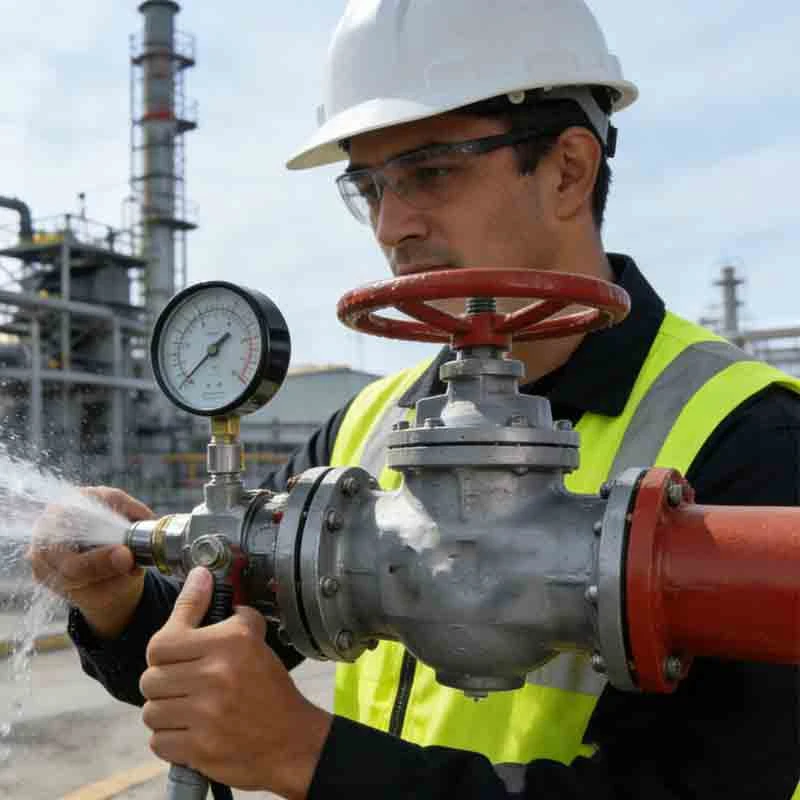
A fire valve may look fine from the outside. The handwheel turns. The body has no visible damage. But inside, there can be corrosion, debris, stuck discs, or sealing problems.
Common hidden issues include:
- Valve not fully open due to installation error
- Internal rust blocking water passage
- Sealing failure that causes slow leakage
- Stem damage that prevents proper operation
- Wrong valve type installed for the system
Without testing, these problems remain invisible until an emergency happens.
Regular testing ensures:
- Correct water flow to the system
- Proper opening and closing function
- No internal blockage
- Reliable sealing performance
- Compliance with fire safety inspection standards
Types of Fire Valves That Require Testing
Different valves in a fire system serve different roles. Each requires specific attention during testing.
| Valve Type | Function in System | What to Check During Testing |
| Gate Valve | Isolation of main water line | Full open/close, stem movement, leakage |
| Butterfly Valve | Quick shut-off control | Disc rotation, locking device, sealing |
| Check Valve | Prevent backflow | Flap movement, debris, reverse sealing |
| Alarm Valve | Trigger alarm when water flows | Pressure response, alarm port function |
| Pressure Reducing Valve | Control downstream pressure | Pressure accuracy, stability, response time |
| OS&Y Valve | Visible open/close status | Stem position, thread condition, operation |
Understanding the valve type is the first step before testing.
Step-by-Step Process: How to Test a Fire Valve
This procedure applies to most fire protection valves installed in pipelines.
1. Visual Inspection
Start with a basic inspection before operating the valve.
Check for:
- Rust, cracks, or paint damage
- Missing bolts or loose connections
- Direction arrow matching water flow
- Correct installation position (vertical/horizontal)
- Clear valve identification tag
Many failures are discovered at this stage.
2. Operational Test (Open and Close)
Slowly operate the valve from fully closed to fully open.
Observe:
- Smooth movement without jamming
- No abnormal noise from inside
- Stem rising evenly (for OS&Y valves)
- Handle or gearbox working normally
If the valve feels stuck or too loose, internal damage may exist.
3. Leakage Test
After closing the valve, check if water passes through.
Methods:
- Monitor downstream pressure gauge
- Open drain point after valve to check seepage
- Inspect flange and gland area for drops
Even small leakage means sealing surfaces are worn.
4. Flow Test
Open the valve fully and measure water flow.
This confirms:
- No internal blockage
- Valve bore is clear
- System delivers designed water volume
Compare actual flow with system design data.
5. Alarm and Signal Test (For Alarm Valves)
Trigger water flow and confirm:
- Alarm bell activates
- Pressure Valve Switch responds
- Signal reaches fire panel
This step is often skipped but is critical.
6. Pressure Test (If Required)
For new installations or replacements:
- Conduct hydrostatic pressure test
- Check body strength and sealing under pressure
This verifies manufacturing integrity and installation quality.

Common Problems Found During Fire Valve Testing
During field inspections, technicians often find similar issues.
| Problem Found | Possible Cause | Risk to System |
| Valve cannot fully open | Installation error or internal rust | Reduced water supply |
| Continuous small leakage | Worn sealing surface | Pressure loss over time |
| Valve stuck during operation | Lack of maintenance, debris | Valve fails during emergency |
| No alarm signal | Blocked alarm port or faulty switch | Fire event not detected |
| Incorrect valve installed | Specification mistake | System does not meet design standard |
These issues are preventable with proper testing and valve selection.
Testing Frequency Recommended for Fire Valves
Testing should not happen only after installation.
A practical schedule used by many facilities:
- After installation: Full testing
- Every 6 months: Operational and leakage test
- Every year: Flow test and alarm test
- After any repair: Full retest
This routine keeps the system reliable without excessive maintenance cost.
Practical Tips from Field Experience
From real projects, several habits improve testing results:
- Always test valves before system handover
- Do not rely only on visual position indicators
- Record test data for future comparison
- Replace valves that show repeated sealing issues
- Choose valves designed for fire systems, not general water use
Valve quality plays a major role. Fire valves must handle long idle periods and still operate instantly.
Conclusion
Testing a fire valve is not complicated, but it must be done carefully and regularly. A valve that is not tested is a hidden risk inside the fire protection system.
Proper testing ensures that when water is needed, it flows without delay. It confirms that alarms work, seals hold, and operation is smooth.
For contractors, inspectors, and facility managers, this process is part of responsible system management.
At Fuid Tech Group, we supply fire valves designed specifically for fire protection systems, with strict quality control and inspection standards. Reliable products combined with proper testing practices create a fire system you can trust when it matters most.