







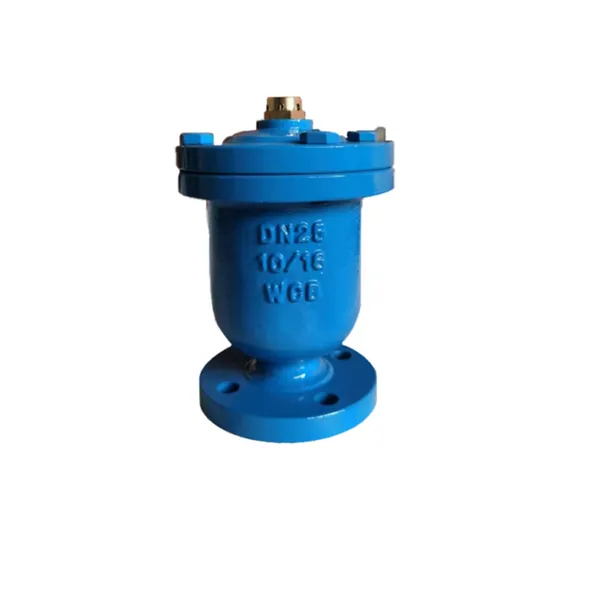

Single Opening Air Valve QB1
Single Opening Air Valve Purpose
This valve is suitable for installation in high-rise building, factory, small pumping stations, water distribution, for air discharge tube and improve the systems of water conveyance efficiency and save energy.
Single Opening Air Valve Definition and Components
What is a Single Opening Air Valve QB1 and Its Main Parts?
The Single Opening Air Valve QB1 is a simplified combination air valve designed for basic air management in pipelines. Like the P41X, it performs dual functions through a single pipeline connection but typically has a less complex internal mechanism. The "QB1" designation is a common model series from manufacturers like GA Industries, APCO, or similar.
Main Components:
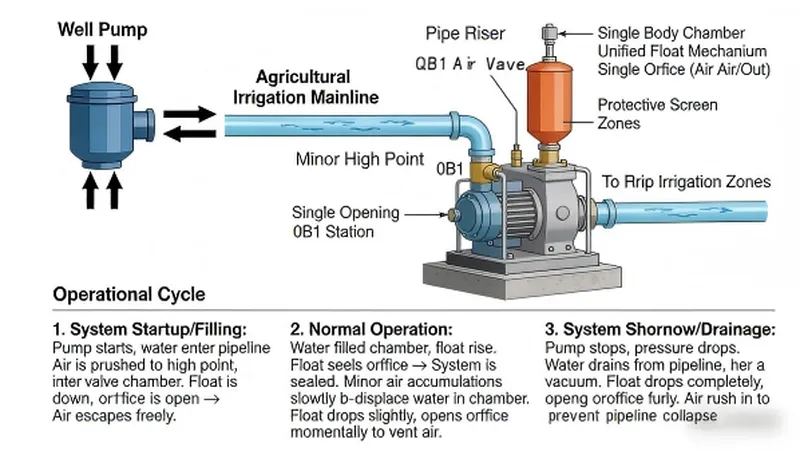
- Unified Valve Body: A single, robust chamber with one main inlet connection. Simpler in design than high-end combination valves.
- Integrated Float Mechanism: A single, dual-purpose float assembly that controls both air release and air intake functions through a common orifice or a simple two-stage mechanism.
- Primary Orifice: A single opening that serves for both air discharge and intake, controlled by the float position.
- Sealing System: Elastomeric seals or a poppet valve that closes when liquid is present.
- Protective Screen/Cap: Prevents insect and debris ingress into the discharge port.
Role, Characteristics, and Application Scenarios of Single Opening Air Valve QB1 in Pipelines
Functions, Operational Features, and Usage Scenarios
Water Valves Functions in Pipelines:
- Basic Air Release: Vents air during system filling and small accumulations during operation.
- Vacuum Protection: Admits air during pipeline drainage to prevent collapse.
- Surge Mitigation: Helps dampen minor pressure surges by allowing rapid air intake.
Operational Features:
- Simplified, Robust Design: Fewer moving parts than complex combination valves, leading to higher reliability in dirty water applications.
- Single-Orifice Operation: The same physical opening is used for both air intake and discharge.
- Economical Solution: Lower cost alternative to full-featured combination valves for less critical applications.
- Maintenance-Friendly: Easier to service due to simpler internal components.
Typical Usage Scenarios:
- Agricultural Irrigation Systems: On mainlines and laterals where cost is a major factor.
- Small Water Distribution Networks: In rural or low-pressure systems.
- Building Services: For basic air management in plumbing risers.
- Low-Risk Industrial Applications: Where perfect air removal is not critical.
- Sump Pump Discharge Lines: For basic air/vacuum management.
Valve Standards: Materials, Design, and Connections
Material, Design, and Connection Standards
Air Valve for Water Material Standards:
- Body: Cast Iron (ASTM A126 Class B), Ductile Iron (ASTM A536) with basic coating, or PVC for certain applications
- Float: Polypropylene or Polyethylene (less expensive than stainless steel).
- Seals: EPDM or Nitrile (standard)
- Internal Components: Stainless Steel or Brass for critical wear parts.
Design & Performance Standards:
- Basic Performance: Generally follows AWWA C512 principles but may not have full certification.
- Pressure Rating: Typically PN10/PN16 (Class 125/150).
- Industry Standards: May reference ISO 22149 or manufacturer-specific standards.
- Simplified Testing: Often tested to basic performance criteria rather than full AWWA protocols.
Connection Standards:
Threaded Connections (Most Common):
- NPT: ½", ¾", 1", 1¼", 1½", 2" (ASME B1.20.1)
- BSP: G½, G¾, G1, G1¼, G1½, G2
- Flanged Connections: ASME B16.1 Class 125 for larger sizes (2" and up).
- Discharge Port: Usually ½" or ¾" threaded with mesh screen
How to Select Single Opening Air Valve
Procurement Process
Application Assessment:
- Determine if basic QB1 valve is sufficient or if full combination valve (P41X) is needed
- Fluid: Water, wastewater, mild chemicals
- Pressure Range: Typically ≤ 150 psi (10 bar)
- Temperature Range: Usually -10°C to 60°C
- Pipeline Size: Match valve size to pipe diameter (typically 1/4 to 1/2 of pipe size)
Technical Specifications:
- Define required functions (air release, vacuum protection, or both)
- Specify material requirements based on fluid compatibility
- Determine connection type and size
Supplier Evaluation:
- Focus on manufacturers specializing in economical pipeline accessories
- Request performance data and typical applications
- Check for basic certifications and testing protocols
Quotation & Commercial Terms:
- These are often stock items with short lead times (2-4 weeks)
- Consider bulk pricing for multiple units
- Clarify warranty terms (typically 1 year)
Documentation Requirements:
- Basic material certificates
- Installation and maintenance instructions
- Performance curves if available
Pre-Shipment Inspection for Export Single Opening Air Valve and Key Considerations
Functional Testing (Sample Basis - 5-10% of batch):
- Basic Seal Test: Apply low air pressure (10-20 psi) to valve in closed position, check for leaks
- Float Movement Test: Ensure float moves freely without binding
- Orifice Check: Verify discharge port is clear and screen is intact
Special Considerations:
- These valves are often shipped in bulk quantities - ensure uniform packing
- For mixed shipments with other valves, pack QB1 valves separately
- Consider humidity-controlled containers for long sea voyages
- If valves include plastic floats, avoid extreme temperature exposure
By following this approach, you can successfully procure and export reliable Single Opening Air Valve QB1 units that provide essential, economical air management for basic pipeline systems.
Single Opening Air Valve Main dimensions(mm)
| DN | L | L1 | D | D1 | D2 |
| 20 | 120 | 15 | 105 | 75 | 56 |
| 25 | 120 | 15 | 115 | 85 | 65 |
| 32 | 120 | 15 | 140 | 100 | 76 |
| 40 | 120 | 15 | 150 | 110 | 84 |
| 50 | 120 | 15 | 165 | 125 | 99 |
Note:1. Other specifications and flange standards are available upon request.
- Design and specifications are subject to change without prior notice.