







What Is a Fire Protection Butterfly Valve and How Does It Work
March 17, 2026
A fire protection butterfly valve is a quarter-turn valve used to control or isolate water flow in fire protection systems such as sprinkler networks, hydrant pipelines, and fire suppression infrastructure. The valve works by rotating a disc mounted on a central shaft inside the pipeline. When the handle or actuator turns the shaft 90 degrees, the disc either allows water to flow freely or blocks the pipeline completely. In fire safety systems, a fire protection butterfly valve plays a critical role by ensuring that water supply can be quickly activated, controlled, or shut off during emergencies or maintenance operations.
In modern buildings, industrial facilities, and commercial complexes, these valves are commonly installed in sprinkler risers, pump rooms, and distribution pipelines. For example, in a large warehouse equipped with automatic sprinklers, the valve allows technicians to isolate a section of the system for maintenance without shutting down the entire network. This capability ensures both operational efficiency and continuous fire safety protection.
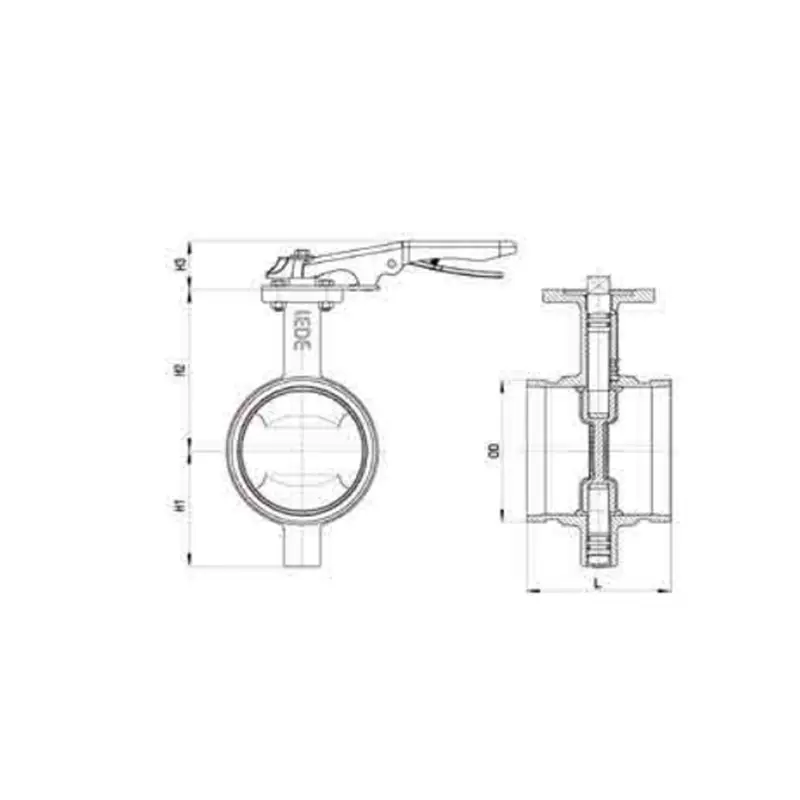
The Basic Structure of a Fire Protection Butterfly Valve
A fire protection butterfly valve has a relatively simple structure compared with many other industrial valves. Despite this simplicity, the design is highly reliable and efficient for fire suppression systems.
Main Components
The valve consists of several key parts that work together to control water flow.
Valve body
The body forms the outer shell of the valve and connects directly to the pipeline. It is typically made from ductile iron or cast iron to withstand pressure and corrosion in fire protection pipelines.
Valve disc
The disc is the internal rotating component responsible for opening and closing the valve. When the disc aligns with the flow direction, water passes through. When it rotates perpendicular to the flow, it blocks the pipeline.
Stem or shaft
The stem connects the actuator or handle to the disc and transmits rotational motion to open or close the valve.
Seat and sealing system
The seat ensures a tight seal when the valve is closed, preventing leakage in fire system pipelines.
Actuator or handle
This component allows manual or automated operation. In fire protection systems, valves are often equipped with gear operators or tamper switches for monitoring.
The simplicity of this structure makes the valve both reliable and cost-effective, which is why it is widely used in fire protection engineering.
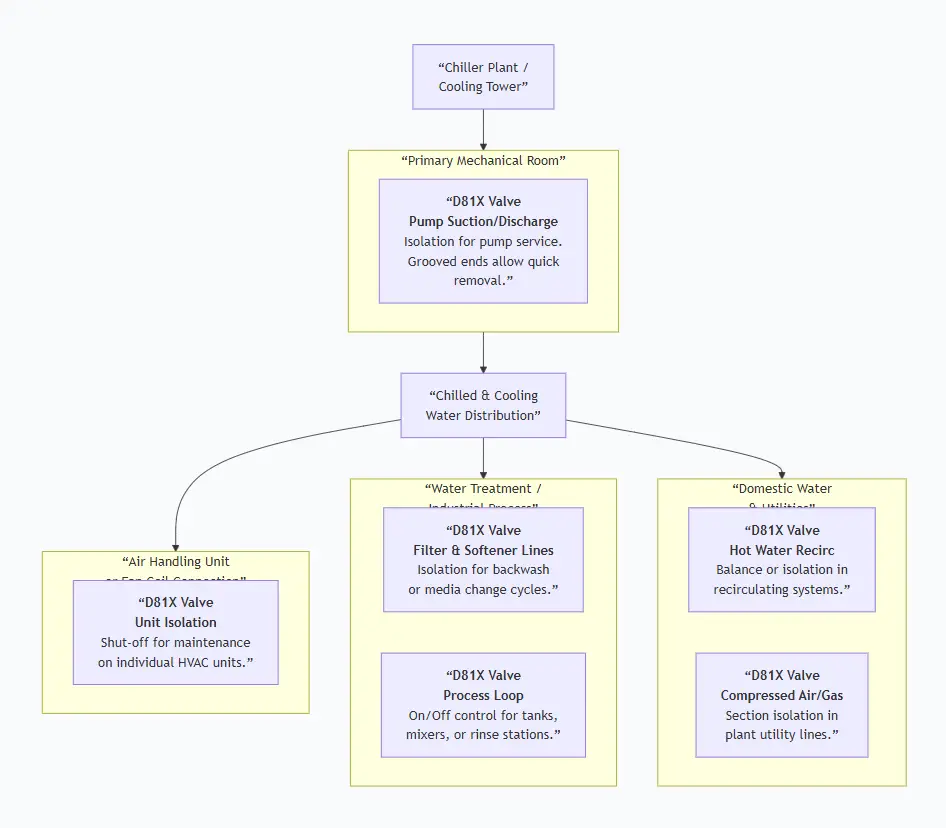
How a Fire Protection Butterfly Valve Works
The working principle of a fire protection butterfly valve is based on a rotating disc mechanism that controls the movement of water through the pipeline.
When the valve is in the open position, the disc is aligned parallel to the direction of water flow. This allows water to move through the pipeline with minimal resistance. When the valve is rotated 90 degrees, the disc moves perpendicular to the pipeline, effectively stopping the flow.
This quick quarter-turn operation makes butterfly valves ideal for emergency systems where fast response is critical.
In fire protection systems, the valve is often integrated with monitoring devices. For instance, a tamper switch can signal the fire alarm control panel if someone attempts to close the valve, ensuring that the sprinkler system remains operational.
A practical example can be seen in high-rise office buildings. Each floor may have its own branch of the sprinkler network controlled by a butterfly valve. If maintenance is required on one floor, technicians can close that specific valve without interrupting fire protection for the rest of the building.
Applications in Fire Protection Systems
Fire protection butterfly valves are widely used across different fire suppression infrastructures due to their compact size, easy installation, and reliable sealing performance.
Fire sprinkler systems
One of the most common applications is in sprinkler pipelines. A typical example is a
fire sprinkler butterfly valve that includes a tamper switch to monitor valve position and ensure compliance with fire safety standards.
Fire pump systems
Butterfly valves are installed near fire pumps to isolate equipment for inspection or repair. Their lightweight design allows quick installation and easy operation in pump rooms.
Industrial fire protection networks
Factories, oil refineries, and warehouses rely on large pipeline systems to deliver water for fire suppression. Butterfly valves provide reliable control points throughout these networks.
Municipal fire protection pipelines
In city infrastructure, valves are often used to regulate water distribution within public fire hydrant networks.
These applications highlight the importance of fire protection butterfly valves in maintaining effective and responsive fire suppression systems.
Advantages of Using Butterfly Valves in Fire Safety Pipelines
Butterfly valves offer several advantages that make them particularly suitable for fire protection systems.
Compact structure
Compared with gate valves, butterfly valves occupy less space and are easier to install in tight mechanical rooms.
Fast operation
The quarter-turn mechanism allows rapid opening and closing, which is crucial during emergency situations.
Lower installation cost
Their lightweight construction reduces installation time and labor costs.
Low maintenance requirements
The simple internal design minimizes wear and makes maintenance easier.
Durability
High-quality materials ensure long service life even under continuous pressure conditions.
These advantages explain why many engineers and contractors prefer butterfly valves for fire protection systems in commercial and industrial buildings.
Comparison of Butterfly Valves with Other Fire System Valves
Different types of valves can be used in fire protection pipelines. The table below highlights the key differences between butterfly valves and other common valve types.
Caption: Comparison of valves commonly used in fire protection systems
| Valve Type | Operation Method | Installation Space | Opening Speed | Typical Application |
|---|---|---|---|---|
| Butterfly Valve | Quarter-turn rotation | Compact | Very fast | Fire sprinkler pipelines |
| Gate Valve | Multi-turn | Larger | Slow | Main isolation valves |
| Ball Valve | Quarter-turn | Compact | Fast | Small pipeline systems |
| Check Valve | Automatic flow control | Medium | Automatic | Prevents backflow |
As shown in the table, butterfly valves offer an ideal balance between quick operation and compact design, making them especially useful in sprinkler and fire suppression pipelines.
Types of Fire Protection Butterfly Valves
There are several types of butterfly valves used in fire safety systems, each designed for specific installation requirements.
Grooved butterfly valves
These valves are commonly used in sprinkler systems because grooved connections allow quick installation and easy maintenance.
Wafer butterfly valves
Wafer-type valves fit between two flanges and are widely used in compact pipeline systems.
Lug butterfly valves
These valves have threaded inserts that allow them to be installed without disturbing the opposite pipeline side.
Supervisory butterfly valves
These valves include monitoring devices such as tamper switches that alert building management systems when the valve position changes.
For more product options and specifications, explore our full range of
fire protection butterfly valves designed for sprinkler systems and fire safety applications.
If you are selecting valves for a fire protection project and need technical guidance, you can always contact us for professional support and product recommendations.
Installation and Maintenance Considerations
Proper installation is essential to ensure the reliability of fire protection butterfly valves.
During installation, the valve should be aligned carefully with the pipeline to prevent stress on the body and sealing components. Technicians should also verify that the valve opens and closes smoothly before the system is pressurized.
Regular inspection is equally important. Maintenance teams should check for signs of corrosion, leakage, or mechanical wear. Tamper switches and monitoring devices should also be tested periodically to ensure proper signal transmission to fire alarm systems.
Proper maintenance not only extends the service life of the valve but also ensures that the fire protection system remains fully operational when needed.
FAQ
What is the main purpose of a fire protection butterfly valve?
The main purpose of a fire protection butterfly valve is to control and isolate water flow in fire suppression systems such as sprinkler networks, hydrant pipelines, and fire pump installations.
Why are butterfly valves preferred in sprinkler systems?
Butterfly valves are preferred because they are compact, easy to install, quick to operate, and require minimal maintenance. Their quarter-turn operation allows rapid response in emergency situations.
Can butterfly valves be monitored remotely?
Yes. Many fire protection butterfly valves are equipped with tamper switches or supervisory switches that connect to building fire alarm systems, allowing remote monitoring of valve status.
What materials are commonly used for fire protection butterfly valves?
Most valves are manufactured using ductile iron bodies, stainless steel stems, and EPDM or rubber sealing seats to ensure durability and corrosion resistance.
How often should fire protection valves be inspected?
Inspection schedules depend on local fire safety regulations, but most systems require periodic testing and visual inspection to ensure that valves remain fully operational.