







How to Choose Fire Fighting Pipe Fittings for High-Pressure Systems
agosto 11, 2026
A fire protection contractor in Singapore contacted us last week with a challenging project.
He was designing a standpipe system for a 45-story residential tower. Because of the building height, the system pressure at the lower levels would exceed 300 psi.
The problem was that most fittings he normally purchased were only rated for 175 psi.
He needed high-pressure fire fighting pipe fittings—but he was not sure which products could safely handle the pressure requirements.
This is becoming a common challenge in modern construction.
As buildings become taller, fire protection systems must operate under higher pressure. Standard fittings are not always suitable for high-rise applications.
At Fluid Tech Group, we supply fire fighting pipe fittings and valves for commercial buildings, industrial facilities, and high-rise projects worldwide.
This guide explains how to select the right fittings for high-pressure fire protection systems, including:
- Pressure ratings
- Material standards
- Connection types
- Certification requirements
- Product selection recommendations

Why High-Pressure Fire Protection Systems Are Becoming More Common
The demand for high-pressure fire protection components is increasing as cities grow vertically and building regulations become stricter.
The global fire protection valve and fitting market continues to expand, driven by:
- Rapid urbanization
- Increasing high-rise construction
- Industrial facility development
- Stricter fire safety requirements
Asia-Pacific is one of the fastest-growing regions due to large-scale infrastructure investment and continuous urban development.
For high-rise buildings, pressure management is a critical design consideration.
A tall building creates significant static pressure at lower floors. A building around 600 feet (approximately 180 meters) can generate about 260 psi of static pressure at the base, even before considering:
- Required outlet pressure
- Friction losses
- Safety margins
Without proper pressure zoning and suitable components, lower-level piping systems may experience pressures beyond the rated capacity of standard fittings.
For contractors and engineers, the conclusion is clear:
High-pressure fire fighting fittings are no longer a specialized option—they are becoming a standard requirement for modern high-rise projects.
Understanding Pressure Ratings for Fire Fighting Pipe Fittings
Pressure rating is the first specification to check when selecting fire protection fittings.
Different building applications require different pressure levels.
Standard Pressure Systems: 175 psi
Most commercial sprinkler systems operate within the standard pressure range.
Typical products include:
- Malleable iron threaded fittings
- Standard ductile iron grooved fittings
These fittings are commonly used for:
- Low-rise commercial buildings
- Standard sprinkler systems
- General fire protection applications
Many standard fire protection fittings are rated for approximately:
175 psig (1200 kPa) working pressure
High-Pressure Systems: 250–300 psi
When system pressure exceeds 175 psi, standard fittings may no longer be suitable.
High-pressure applications usually require components rated for:
- 250 psi (1725 kPa)
- 300 psi (2070 kPa)
Typical applications include:
- High-rise standpipe systems
- Industrial facilities
- Large commercial buildings
Common solutions include:
- UL/FM listed ductile iron grooved fittings
- High-pressure forged steel fittings
Extreme High-Pressure Applications: Class 3000–6000
For specialized applications requiring extremely high pressure, forged steel fittings are commonly selected.
These fittings comply with:
ASME B16.11
Available pressure classes include:
- Class 2000
- Class 3000
- Class 6000
They are commonly used in:
- Petrochemical facilities
- High-pressure industrial systems
- Severe service environments
Fire Fighting Fitting Pressure Rating Comparison
| Pressure Level | Typical Rating | Recommended Fitting Type | Applications |
|---|---|---|---|
| Estándar | 175 psi | Malleable iron fittings, standard grooved fittings | Commercial sprinkler systems, low-rise buildings |
| High Pressure | 250–300 psi | UL/FM ductile iron grooved fittings, forged steel fittings | High-rise buildings, industrial facilities |
| Extreme Pressure | Class 3000–6000 | Forged steel ASME B16.11 fittings | Petrochemical, severe service systems |
Standards and Materials for High-Pressure Fire Protection Fittings
High-pressure systems require materials and manufacturing standards that can withstand demanding operating conditions.
ASME B16.11 Forged Steel Fittings
ASME B16.11 covers forged steel socket-weld and threaded fittings.
The standard defines:
- Pressure classes
- Dimensiones
- Manufacturing requirements
- Material specifications
- Testing requirements
Common pressure classes:
Threaded fittings:
- Class 2000
- Class 3000
- Class 6000
Socket-weld fittings:
- Class 3000
- Class 6000
- Class 9000
Common materials include:
- ASTM A105 carbon steel
- ASTM A182 F304 stainless steel
- ASTM A182 F316L stainless steel
ASTM A105 Carbon Steel Forgings
ASTM A105 is widely used for forged carbon steel fittings in pressure piping systems.
These fittings are suitable for:
- Aplicaciones de alta presión
- Industrial piping
- Fire protection systems requiring higher mechanical strength
ASTM A536 Ductile Iron Fittings
ASTM A536 covers ductile iron castings.
Ductile iron grooved fittings are widely used in fire protection because they provide:
- High strength
- Good durability
- Efficient installation
They are commonly selected for:
- Sprinkler systems
- Standpipe systems
- Commercial buildings
UL and FM Certified Fire Protection Fittings
In many international markets, especially North America and projects following NFPA requirements, certification is critical.
Look for:
- UL Listed fittings
- FM Approved fittings
These certifications verify product performance through testing such as:
- Hydrostatic pressure testing
- Leakage testing
- Mechanical performance testing
For high-pressure systems, always confirm that the certification covers the required pressure rating.
Choosing the Right Connection Type for High-Pressure Systems
The connection method affects installation efficiency, reliability, and pressure performance.
Threaded Fittings
Threaded fittings are commonly used for smaller diameter piping.
Advantages:
- Easy installation
- No welding equipment required
- Suitable for many commercial applications
For high-pressure systems, choose:
Forged steel threaded fittings according to ASME B16.11
rather than standard cast fittings.
Socket-Weld Fittings
Socket-weld fittings provide a stronger permanent connection.
Advantages:
- Excellent pressure resistance
- Reduced leakage risk
- Suitable for high-temperature environments
They are commonly used in demanding applications requiring maximum reliability.
Available pressure classes include:
- Class 3000
- Class 6000
- Class 9000
Grooved Fittings
Grooved systems are increasingly popular in fire protection because they provide:
- Faster installation
- Easier maintenance
- Reduced labor costs
High-pressure grooved fittings are available with ratings up to:
- 350 psi for certain rigid couplings
- 500 psi for heavy-duty flexible couplings
For critical applications, select:
- UL Listed grooved fittings
- FM Approved grooved fittings
Quick Guide: Selecting the Right Fire Fighting Fittings
| Presión del sistema | Recommended Fitting | Normas | Typical Applications |
| Up to 175 psi | Malleable iron threaded fittings, ductile iron grooved fittings | ASME B16.3, ASTM A197 | Commercial sprinkler systems |
| 175–300 psi | UL/FM ductile iron grooved fittings, forged steel threaded fittings | ASME B16.11, ASTM A105 | High-rise buildings, industrial systems |
| Above 300 psi | Forged steel socket-weld fittings | ASME B16.11 Class 3000/6000 | Extreme pressure applications |
| Corrosive environments | Stainless steel forged fittings | ASTM A182 F304/F316L | Marine, offshore, chemical facilities |
What Fluid Tech Group Supplies for High-Pressure Fire Protection Systems
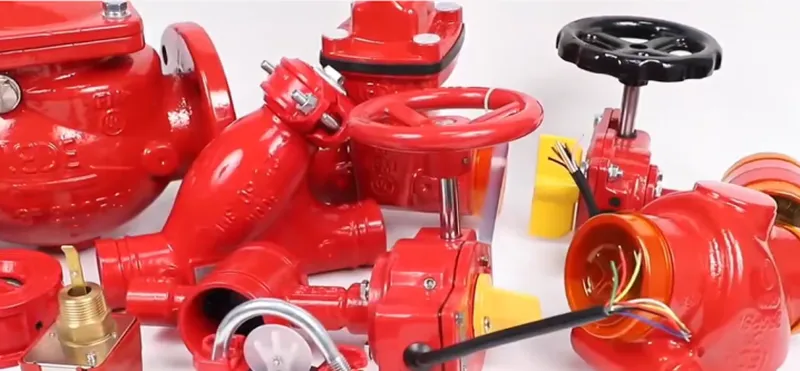
En Fluid Tech Group, we manufacture and supply fire fighting pipe fittings and valves for demanding international projects.
Our product range includesForged Steel Fittings
Compliant with:
- ASME B16.11
- Class 2000, 3000, and 6000 ratings
Available materials:
- ASTM A105 carbon steel
- ASTM A182 F304/F316L stainless steel
Ductile Iron Grooved Fittings
Products include:
- Elbows
- Tees
- Mechanical tees
- Couplings
UL Listed and FM Approved options are available for fire protection applications.
Malleable Iron Threaded Fittings
Manufactured according to:
- ASME B16.3
- ASTM A197
Suitable for standard fire protection systems.
High-Pressure Fire Protection Valves
Including:
Available with working pressure ratings up to:
300 psi
Complete Documentation for International Projects
For global fire protection projects, product documentation is just as important as product performance.
Fluid Tech Group provides:
- Informes de ensayos de materiales
- Dimensional inspection records
- Certificados de pruebas de presión
- Quality certifications
- UL/FM certification documents
This helps contractors, engineers, and project owners complete approval processes faster.
Choose the Right High-Pressure Fire Fighting Fittings Supplier
As buildings become taller and fire safety requirements become stricter, high-pressure fire protection systems will continue to grow.
Selecting the right fittings requires careful consideration of:
- System pressure
- Material standards
- Connection type
- Certification requirements
- Application environment
If you are working on a high-rise or industrial fire protection project, send us your requirements.
Please provide:
- System pressure
- Pipe size
- Connection type (threaded, socket-weld, or grooved)
- Required certifications (UL, FM, or others)
Our technical team will recommend suitable fittings and provide complete documentation support.
Fluid Tech Group
High-pressure fire fighting pipe fittings — forged, grooved, certified, and ready for global projects.