







How Fire Fighting Valve Systems Ensure Safety in Commercial Buildings
mayo 4, 2026
When you walk into a large office building, a hotel, or a shopping mall, you probably do not think about the pipes inside the walls. But those pipes and valves can save lives.
Commercial buildings need sistemas de protección contra incendios that work every time. A stuck valve or a slow response can turn a small fire into a disaster. That is why choosing the right fire fighting valve system matters so much.
The Backbone of Any Sprinkler System – Control Valves and Check Valves
A fire sprinkler system is only as good as its valves. These components control water flow, prevent backflow, and let crews perform maintenance without shutting down the whole building.
Here are the main valves you will find in a commercial fire protection system:
| Tipo de válvula | Main Job | Where You Find It |
| Válvula de compuerta | Opens or shuts water flow fully | Main water supply line |
| Válvula de mariposa | Quick shut-off, compact space | Pump rooms, riser connections |
| Válvula antirretorno de vaivén | Prevents water from flowing backward | After fire pumps, at floor connections |
| Válvula de retención de alarma | Triggers an alarm when sprinklers activate | Sistemas de rociadores de tubería húmeda |
| Válvula reductora de presión | Lowers high incoming water pressure | Tall buildings, zones with high pressure |
| Válvula de compuerta OS&Y | Shows open/shut position clearly | Outside buildings, fire department connections |
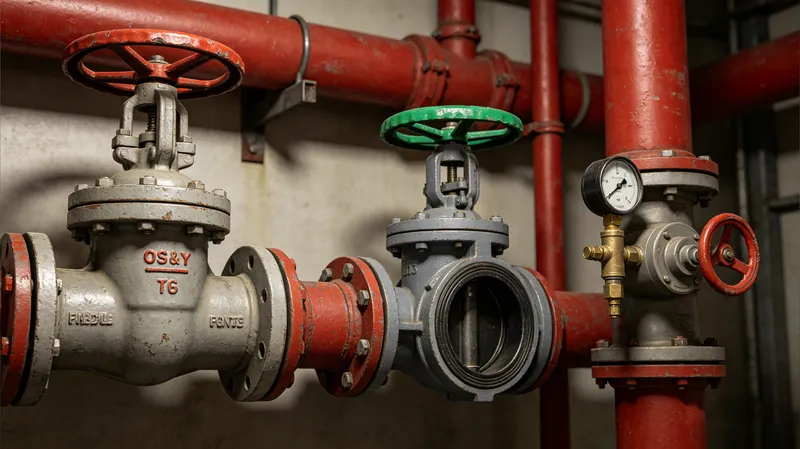
Each valve plays a specific role. Take a swing check valve. It lets water flow in one direction only. If a fire pump stops, the check valve keeps water from draining back. That means water stays ready at every sprinkler head.
Butterfly valves have become popular in fire systems because they take up little space. In a crowded mechanical room, that small size makes a big difference. A 6-inch butterfly valve weighs about 80 lbs. A gate valve of the same size weighs over 200 lbs. Your crew can install the butterfly valve faster, and service it easier.
How Pressure Control Valves Prevent Pipe Bursts in Tall Buildings
Tall buildings create a unique problem. Water pressure at the ground floor might be 150 psi. But by the time water reaches the 20th floor, pressure drops. Designers often zone the system – lower floors get one pressure zone, upper floors get another.
Pressure reducing valves (PRVs) solve this. They take high incoming pressure and drop it to a safe level. Without a PRV, sprinkler pipes near the main supply line could burst. Burst pipes mean no water when you need it most.
Here is how a good pressure reducing valve works in a fire system:
It senses downstream pressure constantly.
- When pressure climbs above the set point, the valve closes slightly.
- When pressure drops, the valve opens more.
- Response time is under two seconds.
For building owners, this means fewer broken pipes and lower repair costs. For firefighters, it means reliable pressure at every floor level.
We recently supplied PRVs for a 35-story hotel project in Southeast Asia. The city water main came in at 180 psi. Each floor zone needed between 75 and 100 psi. Our valves handled the job without any failures during the final pressure test.
Alarm Check Valves – Turning Water Flow Into a Warning
A fire sprinkler system does no good if nobody knows it is running. That is where alarm check valves come in.
En válvula de retención de alarma sits on the main riser of a wet pipe sprinkler system. Under normal conditions, water pressure holds a clapper closed inside the valve. When a sprinkler head opens from heat, water flows. That flow lifts the clapper and sends water to a retard chamber. From there, water activates a pressure switch, which triggers the building fire alarm.
The whole process takes seconds. By the time water reaches the fire, the alarm is already ringing.
Modern alarm check valves include a few useful features:
- A retard chamber that prevents false alarms from pressure surges.
- A test port for monthly inspections.
- An external bypass valve that lets you drain the system without flooding the room.
Without this valve, a small fire could burn for minutes before anyone notices. With it, the building evacuates early. That extra time saves lives.
Why Quality Matters – One Stuck Valve Can Cost Millions
I have seen the difference between cheap valves and quality ones. A discount valve might save you $200 upfront. But if it fails during a fire inspection, the building cannot open for business. Lost revenue from a single day of closure in a large mall can exceed $100,000.
Worse case: a valve fails during a real fire. Insurance claims, lawsuits, and damaged reputation follow.
Here is what we look for in a reliable fire protection valve:
- Certifications. UL listed or FM approved for the local market. No exceptions.
- Corrosion resistance. Epoxy coating inside and out for water service.
- Easy position indication. You should see from 10 feet away whether the valve is open or closed.
- Maintenance access. Bolted bonnets instead of sealed bodies so crews can replace seats or discs.
Fluid Tech Group tests every valve before shipment. We send photos and test reports with each order. Our customers in the Middle East, Africa, and Asia trust us because we do not cut corners.
Final Thoughts – Building Safety Starts With the Right Valves
Commercial building owners have a responsibility. Tenants, employees, and visitors expect a safe environment. Fire inspectors check every valve, every backflow preventer, every pressure gauge. One missing or faulty valve can fail the inspection and delay the building opening.
We recommend creating a simple valve schedule for every project. List each valve location, type, and inspection date. Train maintenance staff on how to operate each valve. Quarterly exercises keep valves from seizing up.
Fire fighting valve systems do not get attention until something goes wrong. But when a fire starts, you want every valve working exactly as designed.
At Fluid Tech Group, we ship fire protection valves to contractors, wholesalers, and engineers worldwide. Our product line includes UL/FM approved gate valves, butterfly valves, check valves, and pressure reducing valves. We also offer custom labeling and packaging for your market.
Need a quote or technical data? Contact our team. We will help you select the right valves for your next commercial building project.