.png)
.png)





How Does a Fire Valve Work
January 15, 2026
The Core Function of Fire Protection Valves
In the realm of life safety and property protection, a fire valve serves as a critical guardian within a building’s fluid management system. These specialized devices are engineered to control the flow of water, gas, or oil during an emergency. Unlike standard industrial valves used for routine flow regulation, a fire-rated valve is designed to perform under extreme conditions, such as high heat or sudden pressure surges. Its primary purpose is to either release a fire-extinguishing agent, like water or foam, or to shut off flammable fuel lines to prevent a secondary explosion or fire spread.
Understanding the internal mechanics is essential for facility managers and engineers. Essentially, these valves remain in a standby state for the majority of their lifespan but must activate with 100% reliability the moment a trigger signal is received. This readiness is achieved through robust construction and high-quality materials, such as ductile iron or stainless steel, which resist corrosion and heat deformation over decades of installation.
Defining the Mechanism and Purpose
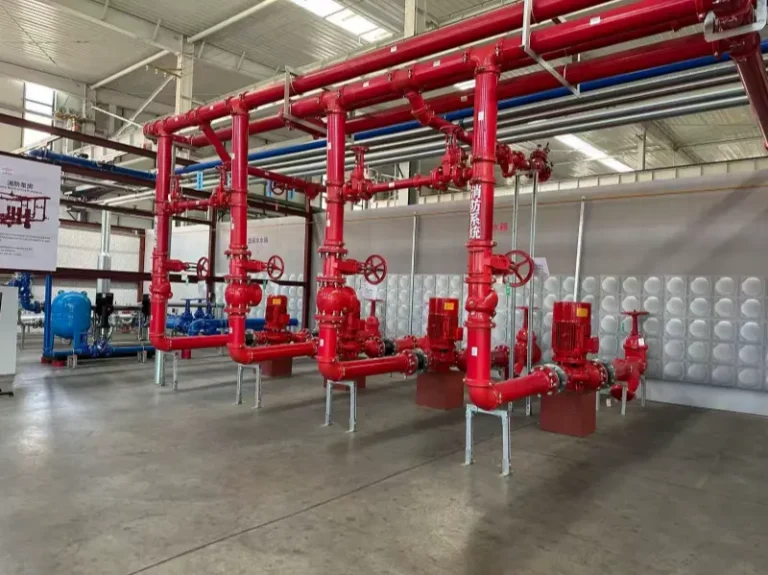
To fully grasp the technology, one must first answer a fundamental question: What Is a Fire Valve? At its most basic level, it is a safety device integrated into a piping network that acts as a gatekeeper. Some are designed as “normally open” to ensure water is always available for sprinklers, while others are “normally closed” to prevent fuel from entering a boiler room unless needed. The activation can be manual, such as a handwheel on a fire hydrant, or automatic, triggered by a thermal link or an electronic signal from a smoke detector.
In automatic systems, the valve often utilizes a “fail-safe” design. This means that if power is lost or a cable is cut by the fire, the valve will automatically move to its safety position. For a fuel line, the safety position is closed; for a fire sprinkler main, the safety position is open. This logic ensures that the building is protected even when secondary systems fail during a disaster.
Diversity in Emergency Flow Control
The effectiveness of a fire protection system depends heavily on selecting the correct fire fighting valves types for the specific environment. Different zones of a building require different flow characteristics. For instance, a high-rise building uses pressure-reducing valves to ensure that the water pressure at the top floor is the same as the ground floor, preventing fire hoses from becoming unmanageable or pipes from bursting under gravity-induced pressure.
Common types include butterfly valves, which are used for their compact size and quick visual indication of whether they are open or closed, and check valves, which prevent the backflow of contaminated water into the municipal supply. Deluge valves are another critical category, used in high-hazard areas like chemical plants to release massive amounts of water simultaneously across an entire zone when a fire is detected.
Mechanical Specifications and Technical Data
Choosing the right valve requires an understanding of technical parameters such as pressure ratings and temperature limits. The following table provides a quick reference for standard specifications found in industrial fire protection applications.
| Valve Component | Common Materials | Standard Ratings | Primary Emergency Function |
| Body Material | Ductile Iron / Cast Steel | PN16 / PN25 / Class 150 | Structural integrity during heat |
| Seat Material | EPDM / NBR / Brass | -20°C to 120°C | Drip-tight sealing |
| Stem Type | OS&Y / Non-Rising | 175 PSI to 300 PSI | Visual status confirmation |
| Actuation | Manual / Electric / Solenoid | IP67 / IP68 Waterproof | Remote or local activation |
| Connection | Flanged / Grooved / Threaded | ANSI / BS / DIN | Secure piping integration |
The Role of Thermal Links and Triggers
Many fire valves, especially those used in fuel lines or domestic oil heating, rely on a fusible link for activation. A fusible link is a mechanical component made of two pieces of metal joined by a specialized solder that melts at a specific temperature, usually around 70°C to 95°C. When a fire occurs and the ambient temperature rises, the solder melts, releasing a spring-loaded mechanism that slams the valve shut.
This purely mechanical trigger is highly valued because it does not require electricity, batteries, or a complex control panel to function. It is a physical reaction to the heat of the fire itself. In larger industrial settings, these mechanical links are often backed up by solenoid actuators that can be triggered by the building’s central fire alarm system, providing a dual layer of protection.
Inspection and Maintenance for Reliability
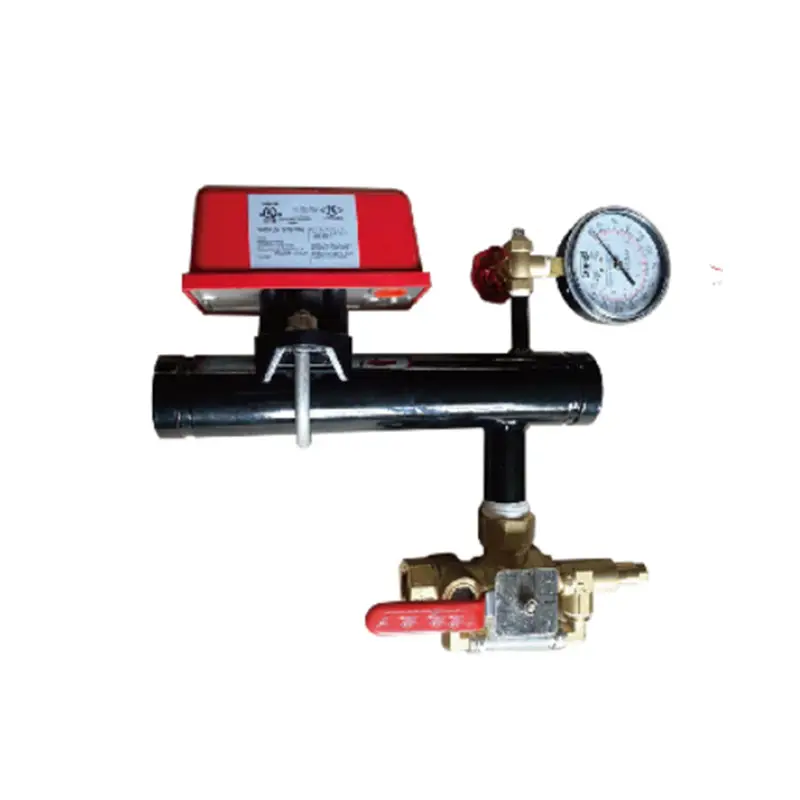
A valve that is stuck due to rust or mineral buildup is useless in an emergency. Therefore, fire protection codes require regular “exercising” of the valves. This involves partially or fully opening and closing the valve to ensure the internal stem and disc move freely. Butterfly valves used in fire systems are often equipped with supervisory switches that send a signal to the alarm panel if the valve is even slightly closed, preventing accidental shutdowns of the water supply.
Maintenance also involves checking the seals. Over time, the rubber or polymer seats inside the valve can degrade. Periodic pressure testing ensures that the valve can still hold back the full force of the water or fuel without leaking. For high-hazard environments, these inspections are usually documented and audited by insurance companies and local fire marshals to ensure the building remains compliant with safety regulations.
Grooved vs Flanged Connections in Modern Piping
The method of connecting a fire valve to the piping system has evolved significantly. While traditional flanged connections are still used for large-diameter mains and pump rooms due to their extreme strength, grooved connections have become the standard for indoor sprinkler systems. Grooved valves are much faster to install and allow for a degree of flexibility in the piping, which is beneficial in seismic zones where the building might move or vibrate.
Grooved connections also simplify maintenance. If a valve needs to be replaced or serviced, a technician can simply loosen two bolts on a coupling rather than dealing with dozens of heavy bolts on a flange. This reduction in downtime is crucial in facilities that cannot afford to have their fire protection systems offline for extended periods.
Future Trends in Smart Fire Valves
The integration of IoT (Internet of Things) technology is transforming how we monitor fire safety equipment. Modern “smart” valves are now being equipped with sensors that monitor water pressure, flow rates, and even the vibration of the pipe in real-time. This data is transmitted to a cloud-based dashboard, allowing facility managers to identify a leak or a closed valve before it becomes a life-threatening problem.
As buildings become more automated, fire valves will continue to evolve from simple mechanical gates into intelligent nodes within a complex safety network. However, regardless of how advanced the electronics become, the core mechanical reliability of the valve body and its ability to withstand the punishing heat of a fire will always remain the most important factor in its design and manufacture.