.png)
.png)





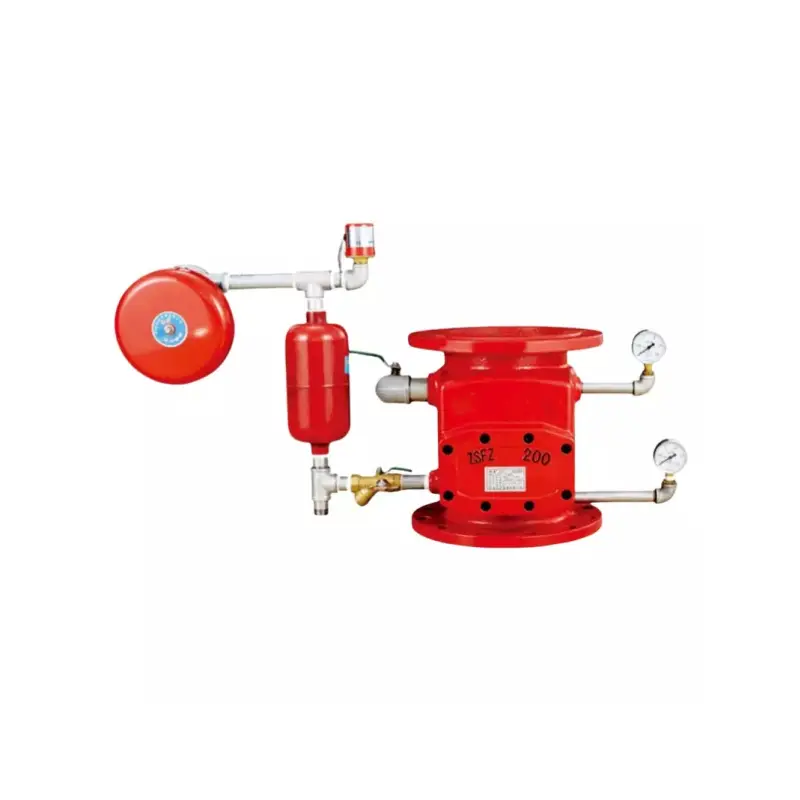
Wet Alarm Valve (WA-V)
Wet Alarm Valve (WA-V) Overview
When the water flow in the system equals or exceeds the flow rate of a single sprinkler head, the valve will activate the fire alarm.
The Wet Sprinkler Alarm Check Valve is designed to allow water to flow into the fire sprinkler system upon detecting a pressure drop. It incorporates a check valve mechanism that opens and permits water to enter the system when the pressure in the fire sprinkler system falls below a predetermined setpoint. This typically occurs when a fire activates a sprinkler head.
Wet Alarm Valve (WA-V) Specifications
Wet Alarm Valve (WA-V) Definition and Components
Wet Alarm Valve (WA-V) is the central control device in wet pipe automatic sprinkler systems. It's a differential pressure valve that remains closed during normal conditions but opens automatically when sprinkler heads operate, allowing water to flow while simultaneously triggering alarm devices.
Fire Valves Main Components:
- Valve Body - Main casting with inlet (water supply) and outlet (system side) connections
- Clapper Assembly - Main sealing disc that opens/closes water flow
- Seat Ring - Precision surface against which clapper seals
- Retard Chamber - Prevents false alarms from pressure surges
- Water Motor Gong - Mechanical alarm bell operated by water flow
- Pressure Switch - Electrical alarm device activated by water pressure
- Test Valve - Simulates sprinkler operation for testing
- Drain Valve - Drains water from valve assembly for maintenance
- Trim Piping - Small-diameter piping connecting components
- Strainer - Protects small orifices from debris
Role, Characteristics, and Application Scenarios of Wet Alarm Valve (WA-V) in Pipelines
Fire Sprinkler Alarm Check Valve Primary Functions:
- System Control: Maintains separation between water supply and sprinkler piping
- Flow Initiation: Automatically opens when sprinklers operate
- Alarm Activation: Triggers both audible (water motor gong) and electrical alarms
- System Supervision: Monitors water supply integrity
Operational Features:
- Automatic Operation: Opens via pressure differential when sprinklers discharge
- Retard Feature: Built-in delay prevents false alarms from pressure fluctuations
- One-Way Flow: Allows water into system but prevents backflow
- Continuous Monitoring: System side remains pressurized at all times
- Easy Reset: Automatically resets after operation
Application Scenarios:
- Commercial Buildings: Offices, hotels, shopping malls, hospitals
- Residential Complexes: Apartment buildings, condominiums
- Educational Facilities: Schools, universities, libraries
- Light Industrial: Warehouses, manufacturing facilities
- Public Buildings: Museums, theaters, airports (non-freezing areas)
Wet Alarm Valve (WA-V) Standards: Materials, Design, and Connections
Material Standards:
- Body/Bonnet: Ductile Iron (ASTM A536), Bronze (ASTM B584)
- Clapper/Seat: Bronze with rubber facing for tight seal
- Internal Parts: Bronze, stainless steel, or brass
- Trim Piping: Copper, galvanized steel, or stainless steel
- Retard Chamber: Bronze or corrosion-resistant material
Design Standards:
- UL 193/FM 1010: Standard for alarm valves
- NFPA 13: Standard for Installation of Sprinkler Systems
- GB 5135.2: Chinese standard for wet alarm valves
- EN 12259-1: European standard for sprinkler components
- AS 2118: Australian standard for automatic fire sprinkler systems
Connection Standards:
- Flanged: ANSI B16.1 Class 125/150, EN 1092-2 PN16
- Threaded: NPT (ANSI B1.20.1) for smaller sizes
- Grooved: Per AWWA C606 for faster installation
- Typical Sizes: 2" to 8" (DN50 to DN200)
- Alarm Line: Usually 1" or 3/4" connections
How to Select Wet Alarm Valve (WA-V)
Purchasing Steps:
Technical Specification:
- Determine size based on system demand (typically 4" or 6")
- Specify pressure rating (175 PSI standard)
- Choose connection type (flanged, threaded, grooved)
- Identify required certifications (UL, FM, LPCB, VdS)
- Note any special requirements (corrosion resistance, seismic)
Supplier Selection:
- Choose manufacturers with UL/FM listings
- Verify experience with similar projects
- Check technical support capabilities
- Review warranty and service terms
Documentation Requirements:
- UL/FM listing certificates
- Factory test reports
- Material certifications
- Installation and maintenance manuals
- Technical submittal drawings
Commercial Considerations:
- Lead Time: 4-8 weeks typically
- Payment Terms: 30% deposit, balance before shipment
- Warranty: 2 years standard
- Shipping: FOB or CIF terms
- MOQ: Usually 1 unit
Pre-Shipment Inspection for Export Wet Alarm Valve (WA-V) and Key Considerations
Inspection Checklist:
| Area | Procedure | Acceptance Criteria |
| Visual | Complete examination | No defects, proper markings |
| Dimensional | Flange measurement | Per ANSI/EN standards |
| Material | Verify certifications | Match specifications |
| Pressure Test | Hydrostatic test @ 1.5XWP | No leaks for 2 minutes |
| Functional Test | Test valve operation | Clapper opens/closes smoothly |
| Alarm Test | Simulate water flow | Gong sounds, pressure switch activates |
| Retard Test | Slow pressure increase | No false alarm |
| Coating | Thickness check | Proper coverage, no holidays |
Export Precautions:
- Thorough Drying: Complete disassembly and drying after testing
- Corrosion Protection: VCI paper, desiccant packs
- Component Protection: Individual wrapping of sensitive parts
- Packaging: Export crates with proper bracing
- Documentation: Complete certificate package including manuals
Real-World Operation:
In this high-rise office scenario, the WA-V serves as the floor control point for the sprinkler system. Each floor has its own valve assembly, creating zone isolation - a fire on one floor doesn't drain the entire building's system.
The system remains constantly pressurized, allowing immediate water discharge when any sprinkler operates. The retard chamber's 5-90 second delay prevents false alarms from temporary pressure changes (like opening another floor's test valve).
When a fire occurs in an office, only the sprinklers in the immediate area activate (typically 1-4 heads initially), but the WA-V opens to supply water to all connected sprinklers on that floor while simultaneously activating building-wide alarms and emergency responses.