






Fire Sprinkler System Pipe Fittings: Design and Installation Guide for Reliable Fire Protection Networks
julio 27, 2026
A fire sprinkler system is often hidden above ceilings, inside walls, or behind building structures.
Most people only notice it when there is a fire emergency.
However, engineers, contractors, and building owners know that the reliability of a sprinkler system depends on thousands of small decisions made during the design and installation stage.
A pipe connection that does not seal correctly, a fitting that does not match the system requirements, or a valve that cannot perform when needed may affect the entire fire protection network.
This is why professional installers do not treat pipe fittings as simple accessories.
Every elbow, tee, coupling, flange, and valve has a specific role in creating a safe and efficient sprinkler system.
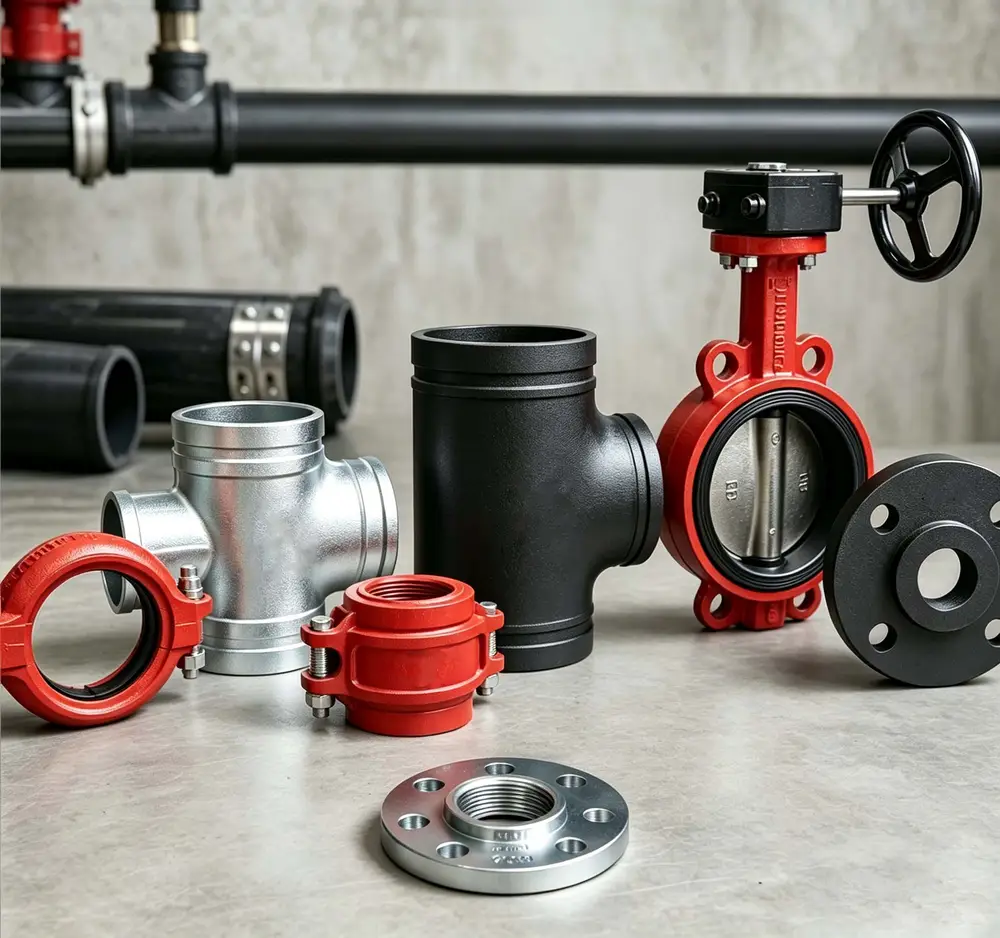
With the continuous growth of commercial buildings, warehouses, industrial facilities, and infrastructure projects worldwide, demand for reliable fire protection components is increasing. The market is also becoming more focused on product quality, certification, and long-term performance.
As a professional fire protection products supplier, Fluid Tech Group understands that successful sprinkler systems begin with the right components and the right installation approach.
Why Are Pipe Fittings Important in Fire Sprinkler System Design?
A fire sprinkler system is not only a network of pipes.
It is a complete system that must deliver water quickly and effectively during an emergency.
Pipe fittings are responsible for connecting different sections of the pipeline and allowing engineers to design complex layouts according to building structures.
In large commercial or industrial projects, sprinkler pipelines may include hundreds or thousands of connection points.
Common fittings used in fire sprinkler systems include:
| Pipe Fitting Type | Main Function | Common Application |
| Elbow Fittings | Change pipeline direction | Sprinkler branch layouts |
| Mechanical Tee | Create branch connections | Commercial fire sprinkler systems |
| Grooved Coupling | Connect grooved pipes quickly | Large industrial projects |
| Reducer Fittings | Connect different pipe sizes | Pipeline transition areas |
| Flanges | Provide detachable connections | Valves and equipment connections |
Choosing suitable fittings helps improve installation efficiency and reduces future maintenance problems.
For international projects, contractors usually consider several factors before purchasing, including material quality, pressure rating, standards compliance, and supplier capability.
What Should Engineers Consider During Sprinkler Pipe Installation?
Many installation problems do not come from the main equipment.
They often come from small details.
A professional sprinkler installation requires careful planning in several areas.
Pipe Material Compatibility
Different projects may use different pipe materials depending on environmental conditions and design requirements.
Carbon steel pipes, galvanized pipes, and stainless steel pipes are commonly used in fire protection systems.
The fittings must match the pipe material and connection method to ensure reliable performance.
Connection Method Selection
The connection method directly affects installation speed and system maintenance.
Common methods include:
- Threaded connections

- Grooved connections

- Flanged connections

- Welded connections

For many modern commercial projects, grooved systems are becoming increasingly popular because they allow faster installation and easier maintenance.
Pressure and Flow Requirements
A sprinkler system must deliver enough water pressure and flow during a fire event.
This means every component, including fittings and valves, needs to meet the required working conditions.
A suitable design considers:
- Building size
- Hazard classification
- Water supply capacity
- Pressure requirements
- Local fire protection standards
Why Are Valves Critical Components in Fire Sprinkler Systems?
Many people think of sprinklers as the main part of fire protection.
In reality, valves play an equally important role.
Valves control the movement of water throughout the system.
A reliable valve allows operators to isolate sections, perform maintenance, and ensure proper system operation.
Common valves used in fire sprinkler systems include:
- Gate valves
- Butterfly valves
- Check valves
- Alarm valves
- Control valves
For large projects, selecting the right valve supplier is essential.
A professional Fire valve manufacturer should provide products with stable performance, accurate manufacturing processes, and consistent quality control.
This is why many global contractors work with experienced suppliers such as valve manufacturers in China, especially when they need reliable production capacity and competitive supply solutions.
How Do Buyers Select Reliable Fire Protection Valve Suppliers?
When purchasing fire protection products, price is only one factor.
Experienced buyers usually evaluate suppliers based on several points.
| Evaluation Factor | Why It Matters |
| Manufacturing Experience | Shows production capability and technical knowledge |
| Product Range | Makes project sourcing easier |
| Quality Control | Reduces installation risks |
| Certification Support | Helps meet international project requirements |
| Delivery Capability | Supports project schedules |
For example, a reliable forged steel valve supplier should understand pressure requirements, material selection, machining accuracy, and testing procedures.
Large engineering projects need suppliers who can provide consistent products over multiple orders, not just a single shipment.
The Growing Global Demand for Fire Protection Systems
Fire safety requirements are becoming stricter in many regions.
New commercial buildings, logistics centers, manufacturing plants, and energy projects all require advanced fire protection solutions.
Several factors are driving market growth:
- Increasing urban development
- Stronger building safety regulations
- Expansion of industrial facilities
- Growing investment in infrastructure projects
This trend creates new opportunities for manufacturers and suppliers who can provide reliable fire protection components.
The future of the industry is not only about producing more products.
It is about providing safer, more efficient, and more dependable solutions.
How Fluid Tech Group Supports Global Fire Protection Projects
At Fluid Tech Group, we focus on providing complete piping solutions for international customers.
Our product range includes:
- Fire sprinkler pipe fittings
- Grooved pipe fittings
- Malleable iron fittings
- Válvulas industriales
- Gate valves
- Forged steel valves
- Flanges and pipeline accessories
As an experienced pipe fittings manufacturer and industrial valve supplier, we understand the requirements of contractors, distributors, and engineering companies.
Our customers need more than products.
They need stable quality, reliable communication, and a supplier who understands international projects.
Through continuous improvement in manufacturing processes and quality management, Fluid Tech Group supports customers across different markets with dependable piping solutions.
Building Safer Systems Starts With Better Components
A fire sprinkler system is designed to protect people, property, and business operations.
Every component inside the system contributes to its final performance.
Choosing suitable pipe fittings, reliable valves, and experienced suppliers can reduce risks and improve long-term system reliability.
As global demand for fire protection infrastructure continues to grow, high-quality components will remain an important part of safer buildings.
Fluid Tech Group will continue working with international partners to provide reliable fire protection piping solutions and support the development of safer infrastructure worldwide.