






Why UL Listed and FM Approved Products Matter in Fire Protection Sourcing?
julio 20, 2026
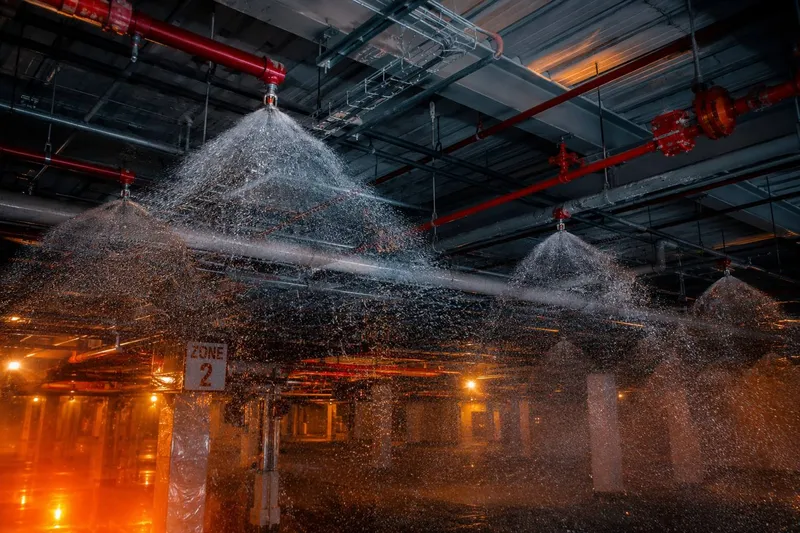
When a fire sprinkler activates, there is no second chance. The valve must open. The coupling must hold. The water must flow. In that moment, the difference between a certified product and an uncertified one is measured not in dollars but in lives and property saved — or lost.
As a procurement manager or project engineer sourcing válvulas de protección contra incendios and fire protection equipment internationally, you navigate a market flooded with options. Prices vary widely. Delivery timelines compete. And yet, one factor should be non-negotiable in your sourcing decision: independent third-party certification.
In the global fire protection industry, two certification marks carry more weight than any other: UL Listed and FM Approved.

This article explains what these certifications actually require, why they matter for your project’s success, and how to verify them when sourcing from China.
What UL Listing and FM Approval Actually Mean
Many buyers treat “UL” and “FM” as interchangeable stamps of quality. They are not. Each represents a distinct testing and auditing regime, and understanding the difference helps you match certification to project requirements.
Behind the UL Mark
UL (Underwriters Laboratories) certification for fire protection products is not a one-time test. It is an ongoing compliance system:
| Stage | What UL Does |
| Initial design review | Engineers examine product design, materials, and manufacturing processes before any testing begins. |
| Destructive performance testing | Products are tested to failure under conditions that simulate real fire scenarios — burst testing, high-temperature exposure, cycle-life testing on valves. |
| Factory audit | UL inspectors visit the manufacturing facility unannounced, typically four times per year, to verify ongoing compliance with the certified design. |
| Market surveillance | UL purchases products from the open market and re-tests them to ensure continued quality. |
A UL Listed fire valve or grooved coupling does not just pass a lab test. It passes that test repeatedly,
under ongoing surveillance. If a manufacturer changes materials, alters the design, or reduces quality — UL can and does revoke the listing.

What FM Approval Entails
FM Approvals (Factory Mutual) takes a parallel but distinct approach, with a stronger emphasis on loss prevention in insured properties:
| Stage | What FM Does |
| Hazard analysis | FM evaluates not just whether the product works, but how it performs across the full range of foreseeable failure modes. |
| Full-scale fire testing | Unlike some lab tests, FM conducts full-scale system tests — for example, testing a complete sprinkler and piping assembly under actual fire conditions. |
| Production audit | FM also conducts factory audits, but with additional focus on quality management systems and traceability of raw materials. |
| R&D collaboration | FM maintains its own research campus and test facility, continuously updating standards based on real-world loss data from insured properties worldwide. |
The practical implication: an FM Approved product has been tested not only to perform under design conditions but also to minimize property loss when things go wrong — which is why FM Approved equipment is often a requirement for buildings insured by FM Global-affiliated carriers.
Why Certification Matters for Your Project
The value of UL/FM certification extends beyond the technical — it directly impacts your project’s timeline, budget, and legal exposure.
1. AHJ Approval: The Gatekeeper You Cannot Bypass
Every fire protection system must be approved by the local Authority Having Jurisdiction (AHJ) — the fire marshal, building inspector, or insurance underwriter who signs off before a building can be occupied.
An AHJ reviewing your system will check component certifications.If a válvula de compuerta, coupling, or fitting lacks a recognized listing:
- The system fails inspection. Installation stops. Occupancy is delayed.
- You pay to replace compliant components. Retrofit labor costs often exceed the original material savings by 3x to 5x.
- Your reputation with the AHJ suffers. Future projects face heightened scrutiny.
Certification is not a “nice to have” checkbox. It is the key that unlocks project completion.
2. Insurance Compliance: The Fine Print That Matters
Commercial property insurance policies routinely require fire protection equipment to carry UL or FM certification. If a loss occurs and the investigation reveals uncertified components in the sprinkler system:
- Claims may be denied or reduced. The insurer argues the system did not meet the required standard.
- Premiums increase. Even if the claim is paid, the presence of uncertified equipment flags the property as higher risk.
- Liability shifts downstream. If you, as the contractor or specifier, installed uncertified equipment, you may bear the financial burden of the denied claim.
This is not hypothetical. FM Global’s loss data shows that properly certified fire protection systems reduce average property loss by over 60% in fire events compared to non-compliant systems.
3. International Project Compliance
If you are supplying fire protection components to projects governed by international standards, certification requirements cascade through the entire supply chain:
| Región | Typical Certification Required |
| Norteamérica | UL Listed, FM Approved, or ULC (Canada) |
| Middle East (UAE, Saudi Arabia, Qatar) | UL/FM + Civil Defence approval (often requires UL/FM as a prerequisite) |
| Southeast Asia | UL/FM or LPCB (UK) depending on project specifier |
| South America | UL/FM increasingly required on internationally-financed commercial projects |
| Europe | VdS (Germany), LPCB (UK), or EN standards with CE marking |
Sourcing UL/FM certified products from the start ensures your materials qualify across multiple jurisdictions — a competitive advantage when your client portfolio spans regions.
The Hidden Cost of Non-Certified Products
There is a reason uncertified fire protection components are cheaper. The savings, however, evaporate quickly when you account for total project cost:
Scenario: A 20-story commercial tower in a Middle Eastern market
| Cost Element | Certified (UL/FM) | Uncertified |
| Initial material cost (valves + fittings) | $120,000 | $85,000 |
| AHJ inspection: pass/fail | Pass (1 day) | Fail — re-inspection required |
| Replacement materials + labor | $0 | $95,000 |
| Construction delay (4 weeks) | $0 | $140,000 (carrying cost) |
| Total landed cost | $120,000 | $320,000 |
The numbers tell the story. The “savings” from uncertified products are, in reality, a loan against a future cost that is almost certain to arrive — and at a ruinous interest rate.
Fluid Tech Group’s Commitment to Certified Quality
We manufacture fire protection valves, grooved fittings, and pipe components that carry the certifications your projects demand:
- UL Listed and FM Approved fire protection valves — including signal butterfly valves, gate valves, check valves, and alarm check valves.
- UL Listed and FM Approved grooved couplings and fittings — rigid and flexible, covering diameters from 1″ to 24″ (DN25–DN600).
- Factory audit records available upon request — transparency is our standard.
- Full traceability — every certified product ships with documentation linking the batch to the certification file, so your AHJ can verify compliance in minutes, not days.
We do not ask you to take our word for it. We provide the certification documentation before you place the order.

Our quality is verifiable. Our track record is public.
How to Verify a Supplier’s UL/FM Certifications (Before You Order)
Before committing to any fire protection supplier, run these three checks:
- Request the UL or FM certificate file number. Every certified product carries a unique file number (e.g., UL File EXXXXXX or FM Project ID XXXXXXXX). Ask for it upfront.
- Verify online. UL and FM both maintain public online certification directories:
- UL Product iQ: Search by company name, file number, or product category.
- FM Approval Guide: Search by product type and manufacturer.
3.Check scope of certification. A manufacturer may be UL Listed for butterfly valves but not for gate valves, or for sizes up to 8″ but not 12″. Verify the certification covers the exact product, size, and pressure rating you are ordering.
A legitimate manufacturer will provide certification documentation within 24 hours. If there is hesitation or delay — walk away.