







How Fire Fighting Valve Systems Help Protect Commercial Buildings
mayo 11, 2026
Why More Projects Are Paying Attention to System Reliability
When people talk about fire protection in commercial buildings, they usually think about sprinklers first.
But in actual projects, the system depends on much more than sprinkler heads alone.
Behind the piping network, there are valves controlling water flow, pressure, and system response. If those valves do not work properly, the entire system can run into trouble.
That’s one reason fire fighting valve systems have become more important in recent years, especially in large commercial projects.
At Fuid Tech Group, we’ve noticed the same thing across overseas markets. Clients are asking more questions about reliability, installation, and long-term performance—not only price.

Commercial Projects Are Getting Bigger
A few years ago, many fire protection systems were relatively straightforward.
Now projects are different.
Warehouses are larger.
Commercial buildings are taller.
Industrial facilities are more complex.
In many cities, logistics centers and high-rise buildings continue to increase. These projects require more stable fire protection systems because the risk level is higher than before.
That naturally increases demand for:
- Fire fighting valves
- Grooved couplings
- Pipe fittings
- Sprinkler system components
In some South American markets, we’ve also seen more renovation projects recently. Older buildings are upgrading existing fire systems to meet newer safety standards.
So demand is not only coming from new construction anymore.
Why Valve Systems Matter So Much
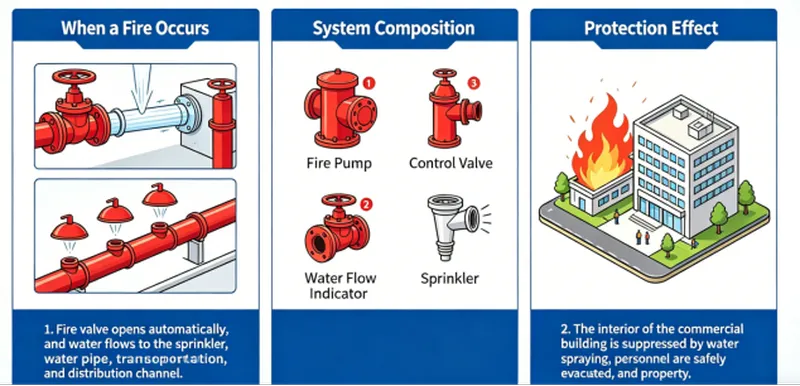
On paper, a valve may look like a simple product.
But on-site, it directly affects whether water can move through the system correctly during an emergency.
Different valves perform different jobs.
Some isolate water flow.
Some prevent backflow.
Some help maintain stable pressure.
If one part becomes unstable, contractors may face inspection problems or maintenance issues later.
That’s why experienced buyers usually pay close attention to valve quality, even though valves are only one part of the whole system.
What Contractors Usually Care About
In real projects, contractors are often practical.
Most are not asking for complicated features. Usually they focus on a few basic things:
- Is installation easy?
- Does the valve seal properly?
- Will it stay stable under pressure?
- Can replacement or maintenance be handled easily later?
Actually, these simple questions matter more than marketing language.
A product may look good in a catalog, but if it slows installation or creates leakage problems, nobody wants to use it again.
Grooved Systems Continue to Become More Popular
One thing we’ve noticed in overseas projects is the continued use of grooved piping systems.
Especially in commercial buildings, many contractors prefer grooved connections because they save time during installation.
Compared with traditional welding methods, grooved systems are usually:
- Faster to install
- Easier to maintain
- More convenient for future modifications
For large projects, this can make a noticeable difference.
Labor cost is another reason.
In some regions, installation labor is becoming more expensive, so contractors naturally prefer systems that reduce workload on-site.
Common Valve Types Used in Commercial Buildings
Below is a simple overview of several common products used in commercial fire protection systems.
| Tipo de producto | Main Purpose | Common Application |
| Válvula de mariposa | Water flow control | Sprinkler pipelines |
| Válvula de compuerta | System isolation | Main fire pipelines |
| Válvula de retención | Prevents reverse water flow | Fire pump systems |
| Alarm Valve | Activates alarm response | Wet sprinkler systems |
| Grooved Couplings | Pipe connection | Commercial piping systems |
These products may not be complicated individually, but together they affect the stability of the entire system.
Buyers Are More Careful Than Before
Over the past few years, buyer priorities have changed quite a bit.
Before, many customers focused mainly on getting lower prices.
Now the conversation feels different.
Clients ask more about:
- Product consistency
- Delivery reliability
- Pressure ratings
- Long-term durability
Part of this comes from stricter safety standards. Another reason is that project delays have become more expensive.
Contractors don’t want problems caused by unstable components. Distributors also prefer suppliers who can maintain consistent quality over time.
From our side, this shift is actually healthy for the industry.
The Market Still Looks Strong
Looking at overseas markets, especially developing regions, the overall direction still looks positive.
Commercial construction continues.
Infrastructure projects continue.
Safety requirements continue to improve.
As these projects move forward, demand for fire protection products also remains steady.
Of course, competition is strong. But buyers today are becoming more quality-focused, which creates better opportunities for suppliers that care about long-term cooperation.
About Fuid Tech Group
Fuid Tech Group supplies fire protection piping products for overseas projects.
We try to keep things simple and practical.
Our focus is mainly on:
- Stable product quality
- Reliable delivery
- Clear communication
- Products that work well in actual projects
Over time, we’ve learned that customers usually remember consistency more than anything else.
Not complicated presentations.
Not big promises.
Just stable products and smooth cooperation.
Final Thoughts
Fire fighting valve systems are not the most visible part of a commercial building, but they are one of the parts people rely on most during emergencies.
As commercial projects continue growing around the world, reliable fire protection systems will remain essential.
And for suppliers and buyers alike, long-term stability is becoming more important than short-term pricing.
That trend will likely continue for many years ahead. Póngase en contacto con nosotros for more information.