







Fire Sprinkler System Pipe Fittings: Design and Installation Guide
August 19, 2026
Picture a modern commercial high-rise in downtown Sydney or a massive logistics hub near Melbourne. Hundreds of people work inside every day. Millions of dollars in equipment, stock, and infrastructure sit under one roof. What protects all of it? It isn’t just concrete walls or security alarms—it is the pressurized fire piping network running behind the ceilings.
When a sudden fire breaks out, every single component must work without a second delay. A cracked fitting, a leaking groove, or a misaligned joint can cause water pressure to drop instantly, turning a minor containment event into a catastrophic loss.
For building contractors, plumbing engineers, and fire safety importers across Australia, sourcing reliable piping components is not just about ticking a box. It’s a critical safety decision that protects human lives and secures project delivery times.
The Australian & Global Fire Safety Surge: A Booming Market for Importers
If you operate in the fluid control and building safety sector, market conditions have never been stronger. Across Australia and the Asia-Pacific region, rapid commercial development, strict local building codes, and aggressive industrial expansion are driving record demand for fire protection hardware.
Market research shows the global fire sprinkler system market will surpass 15 billion by 2030, growing at a steady CAGR of over 6.2%.
Three major drivers explain this sustained expansion:
Stricter Local Compliance Standards: Authorities across Australia strictly enforce standards like AS 2419 and AS 2118, requiring fully certified, high-pressure fire components for all public and commercial sites.

Logistics & Industrial Hub Boom: The rise of regional fulfillment centers requires high-density overhead sprinkler networks and high-pressure riser systems.
Retrofit and Maintenance Cycles: Older commercial buildings are upgrading aging threaded pipe lines with modern grooved piping to reduce maintenance costs and pass annual safety audits.
These market tailwinds offer fire protection distributors and contractors significant commercial growth. Winning these tenders requires a supply chain backed by top-grade engineering.
Fire Sprinkler System Pipe Fittings: Key Types and Technical Standards
Fire protection systems rely on heavy-duty fittings to handle sudden pressure surges when main Fire Valves open. Choosing the right fitting connection directly impacts installation speed, line pressure retention, and overall job costs.
1. Grooved Pipe Fittings (Ductile Iron)
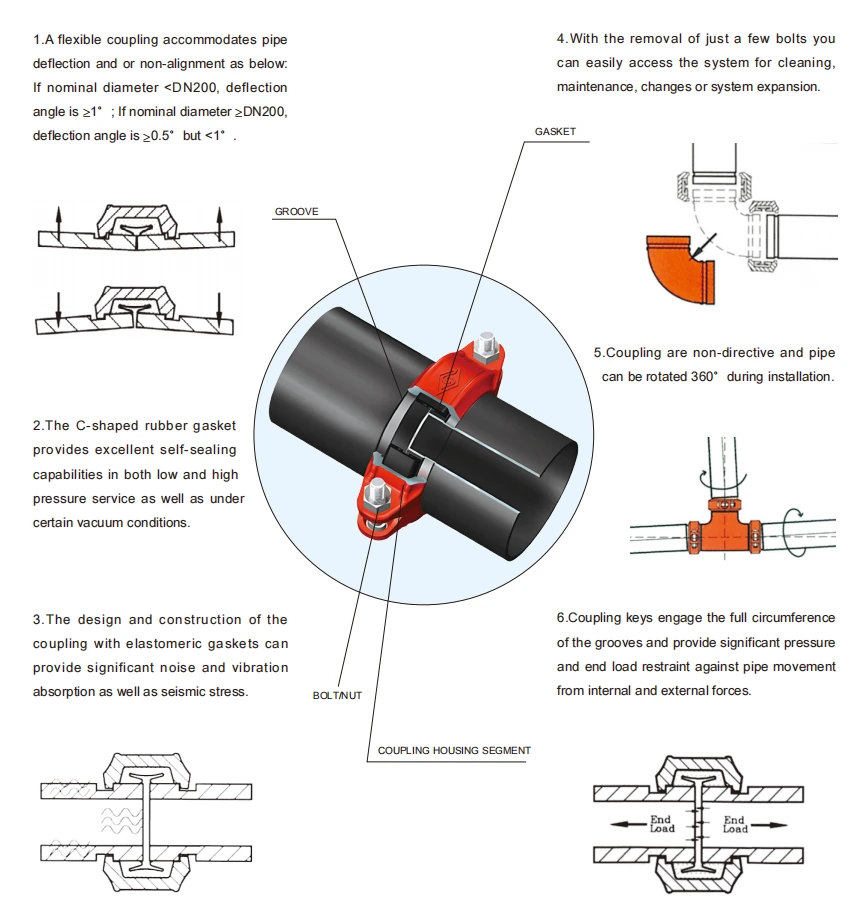
Grooved fittings are the primary choice for main risers and distribution lines in modern Australian sites. A rolled or cut groove receives a flexible rubber gasket and ductile iron housing segments bolted together.
Main Advantages: Fast assembly, excellent mechanical flexibility, and built-in vibration absorption.
Typical Uses: Main risers, long distribution runs, and pump room connections.
2. Threaded Fittings (Malleable Iron)
Threaded fittings connect smaller pipe sizes using precision NPT or BSP threads.
Main Advantages: Ideal for tight spaces where roll-grooving equipment cannot reach on site.
Typical Uses: Sprinkler head drops, branch line connections, and gauge assemblies (typically 2-inch sizes and below).
3. Flanged Fittings and Mechanical Tees
Flanged valves and mechanical tees allow direct connections to control pumps, backflow preventers, and main branch take-offs without cutting full pipe sections.
Crucial Engineering Standards & Approvals
Fire pipe fittings must hold verified international testing certifications to clear Australian site inspections:
UL / FM Approvals: Underwriters Laboratories and Factory Mutual logos confirm the fitting handles rated working pressures (175 PSI to 300 PSI) with high safety margins.
ISO 9001 & ASTM A536: Guarantees that ductile iron castings meet exact chemical, tensile, and yield strength specifications across every production batch.
Design and Installation Guide: Field Best Practices for Engineers
Following proven site practices prevents unexpected pressure drops, field leaks, and costly installation rework.
Step 1: Match Pressure Ratings with System Design
Always cross-check the fitting working pressure against the maximum output of the system fire pump. Standard high-rise sprinkler setups run between 175 PSI and 300 PSI.
Step 2: Inspect Pipe End Preparation
For grooved lines, measure groove depth and distance from the pipe end. Shallow or uneven grooves cause gasket failure under pressure surges. For threaded lines, clean off metal burrs and apply approved thread sealants.
Step 3: Gasket Lubrication and Housing Alignment
Apply a thin layer of non-toxic, approved lubricant to the rubber gasket before inserting it into the grooved housing. This prevents gasket pinching during bolt tightening.
Step 4: Alternate Bolt Tightening
Tighten housing bolts evenly, alternating from side to side. Ensure the bolt pads achieve firm metal-to-metal contact without over-torquing.
Step 5: Perform Hydrostatic Pressure Tests
Before drywalls and ceiling tiles go up, run a full hydrostatic pressure test (typically 200 PSI for two hours per NFPA and Australian guidelines) to verify zero pressure drop across the network.
Quick Comparison: Fitting Selection Matrix
| Fitting Type | Connection Method | Core Advantage | Primary Application Site |
| Grooved Ductile Iron | Mechanical groove & rubber gasket | Ultra-fast setup, absorbs vibration | Main risers & overhead mains |
| Threaded Malleable Iron | NPT / BSP precision threads | Ideal for small pipe diameters | Sprinkler head drops (≤ 2″) |
| Flanged Iron Fittings | Bolted flange face connection | Rigid, high-load structural support | Pump rooms & alarm valves |
| Mechanical Branch Tees | Clamped hole-cut fitting | Easy drop-in branch connections | Mid-line branch pipe take-offs |
Fluid Tech Group: Your Premier Valve Manufacturer in China
Navigating strict project specifications requires an experienced manufacturing partner who understands precision metallurgy and international shipping logistics.
Fluid Tech Piping Systems Co.,Ltd (known globally as Fluid Tech Group) is a premier China valve manufacturer and an authoritative industrial valve supplier. We specialize in designing, casting, and exporting a complete range of UL/FM-certified ductile iron grooved fittings, malleable iron threaded fittings, gate valves, and butterfly valves to B2B clients across Australia, South America, Europe, and the Middle East.
Why Australian Importers & Contractors Trust Fluid Tech Group:
Full Compliance & Certification: Our products carry verified UL, FM, ISO, and CE credentials, ensuring smooth project approvals by local Australian inspectors.
Factory-Direct Quality Control: We manage the entire manufacturing cycle—from raw metal casting and CNC machining to automated epoxy powder coating and 100% hydrostatic testing.
Reliable B2B Export Support: We supply clear material test reports (MTRs), custom OEM branding, exact tariff documentation, and heavy-duty ocean packaging for safe port delivery.
The global fire protection sector is expanding rapidly. Partner with Fluid Tech Group to build a secure supply chain, protect your job sites, and win bigger project tenders.
Contact our sales engineering team today to request product catalogs, technical datasheets, or a competitive quotation for your next project.