







Why Do Fire Protection Systems Require Check Valves?
March 2, 2026
Fire protection systems rely on stable water flow, predictable pressure, and fast response. Many components work together to achieve this. Among them, the check Valve for Water plays a quiet but critical role.
In many projects across South America and other developing regions, water supply conditions are not always ideal. Pressure may fluctuate. Pump systems may start and stop frequently. Municipal water lines may experience reverse flow risks. In these environments, the check valve is not optional. It becomes a key safety device inside the fire line.
Understanding why fire protection systems require check valves helps engineers, contractors, and buyers make better choices when selecting pipeline components.
What Is a Check Valve in a Fire Protection Line?
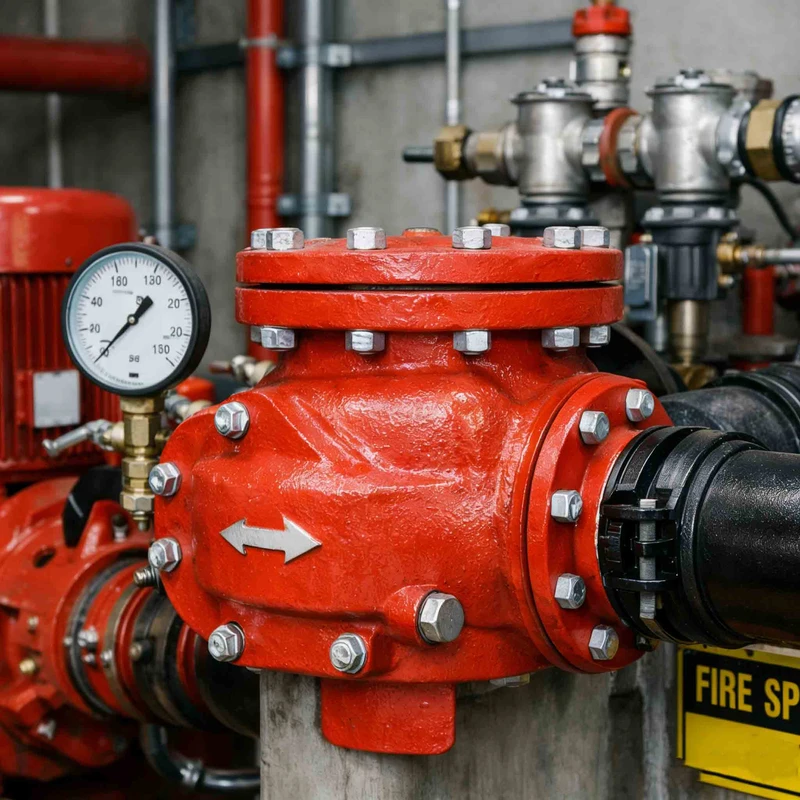
A check valve allows water to flow in one direction only. It closes automatically when flow tries to reverse.
In a fire protection system, the valve is usually installed:
- After the fire pump discharge
- On the riser line
- Between the water supply and sprinkler network
- Near backflow prevention assemblies
- On branch lines in large systems
Unlike manual valves, a check valve operates without human control. It reacts to pressure and flow conditions inside the pipe.
This simple action prevents several serious problems that may otherwise go unnoticed until a system fails during an emergency.
Preventing Reverse Flow That Can Damage the System
Reverse flow is one of the most common risks in fire pipelines.
When a fire pump stops suddenly, the moving column of water inside the pipe tries to return backward. This reverse motion can:
- Damage the fire pump impeller
- Loosen pipe joints and fittings
- Cause pressure shock (water hammer)
- Send contaminated water back into the clean water supply
A properly selected swing check valve or silent check valve closes at the right moment and blocks this reverse movement.
Without it, the entire system experiences stress every time the pump stops.
In regions where power supply is unstable, frequent pump start and stop cycles make this issue even more serious.
Protecting the Fire Pump and Maintaining Pressure
The fire pump is the heart of the system. Its job is to maintain pressure and deliver water when needed.
If no check valve exists on the discharge side:
- System pressure may drop when the pump is idle
- Water can flow backward into the pump casing
- The pump may spin in reverse direction
- Seals and bearings wear out faster
Over time, this shortens pump life and increases maintenance cost.
A check valve keeps pressure inside the sprinkler network stable. It also ensures the pump only works in one direction, which is how it was designed to operate.
Avoiding Water Hammer in Long Pipeline Runs
Water hammer is a pressure surge caused by sudden change in flow direction. It is common in long fire mains and vertical risers.
When water reverses quickly, the pressure wave hits elbows, tees, and valves. This creates noise, vibration, and sometimes cracks in the pipeline.
Check valves reduce the speed of reverse flow. Some types, such as silent check valves, close gradually to minimize shock.

This is especially important in high-rise buildings, warehouses, and industrial plants where pipe length is significant.
Meeting Fire Protection Standards and Inspection Requirements
Many fire codes and standards require check valves in specific locations.
For example, standards such as NFPA and local fire regulations require:
- A check valve after the fire pump
- Check valves in backflow prevention assemblies
- Check valves on sprinkler risers in certain designs
During inspection, missing or improperly installed check valves can lead to system rejection.
For contractors and distributors, supplying compliant components avoids delays during project approval.
Maintaining System Readiness During Idle Periods
Fire systems stay idle most of the time. Water remains inside the pipes for months or years.
Without check valves:
- Pressure may slowly leak back to the supply side
- Air may enter the system
- Corrosion risk increases
- System pressure gauges may show unstable readings
A check valve helps keep the system “charged” and ready. When a sprinkler head opens, water is delivered immediately without delay.
Common Locations Where Check Valves Are Installed
| Installation Position | Purpose | Risk Without Check Valve |
| After fire pump discharge | Prevent reverse flow into pump | Pump damage, reverse rotation, pressure loss |
| On sprinkler riser | Maintain vertical column pressure | Slow response, pressure drop |
| Between municipal supply and system | Prevent contamination and backflow | Water supply pollution |
| Near backflow prevention assembly | Support one-way flow requirement | Failed inspection, legal non-compliance |
| On long horizontal fire mains | Reduce water hammer and reverse surge | Pipe vibration, joint leakage |
| On branch lines of large fire networks | Keep sectional pressure stable | Uneven system pressure |
Choosing the Right Type of Check Valve for Fire Systems
Not all check valves perform the same way.
Common types used in fire protection include:
- Swing Check Valve – Simple structure, suitable for large diameter pipes
- Silent Check Valve – Spring-assisted, reduces water hammer
- Dual Plate Check Valve – Compact design, light weight, fast closing
- Lift Check Valve – Used in vertical installations
The selection depends on pipe size, flow rate, installation position, and pressure class.
In many projects across South America, contractors prefer swing check valves for main lines due to durability and cost-effectiveness. Silent check valves are often chosen for pump discharge to reduce shock.
A Small Component That Prevents Major Failures
Check valves are not expensive compared to pumps, pipes, and sprinkler networks. Yet they prevent:
- Mechanical damage
- Inspection failure
- Pressure instability
- Water contamination
- Pipeline stress
In fire protection engineering, reliability comes from controlling small details inside the system.
This is why experienced engineers never design a fire line without check valves.
Final Thoughts
A fire protection system must work perfectly after years of inactivity. Every component must support that goal.
The check valve ensures water flows only where it should. It protects the pump. It stabilizes pressure. It prevents damage. It helps the system pass inspection.
For distributors, contractors, and project owners, understanding the role of check valves leads to better system performance and fewer problems during operation.
At Fuid Tech Group, we supply fire-rated check valves designed for reliable one-way flow control in demanding fire protection environments. Proper valve selection today can prevent costly failures tomorrow.