







90% of Pipeline Failures Are Caused by Choosing the Wrong Non-Metallic Fabric Expansion Joint?” An Engineering Reality
February 10, 2026
In many duct and pipeline systems, expansion joints are treated as minor accessories. They are often selected at the last stage of a project, sometimes based only on size or price.
However, in real industrial environments, a large number of leakage problems, fabric tearing, abnormal vibration, and premature maintenance issues can be traced back to one root cause: the wrong non-metallic fabric expansion joint.
Engineers who work with flue gas ducts, ventilation systems, boilers, water supply valve and exhaust pipelines understand this clearly. When the expansion joint fails, the entire system feels the impact.
At Fuid Tech Group, we have seen many projects where the duct design was correct, the fan capacity was sufficient, and the installation followed standards, yet the system still experienced repeated failures. The issue was not the equipment. It was the incorrect selection of the fabric expansion joint.
What a Non-Metallic Fabric Expansion Joint Actually Does
A Non-Metallic Expansion Joint acts like a flexible connector between two rigid duct sections. Instead of resisting movement, it absorbs it.
Pipelines expand when heated and contract when cooled. Fans and blowers create vibration. Structural movement causes misalignment. The expansion joint handles all of these forces at the same time.
Unlike metal expansion joints, fabric types allow large multi-directional displacement. They also resist corrosion from acidic flue gas and reduce noise transmitted through the duct.
The structure usually includes multiple fabric layers, insulation material, reinforcement mesh, and a metal frame for connection. Each layer serves a purpose, from flexibility to heat protection.

This design works well only when the joint matches the actual working conditions.
Why Wrong Selection Leads to Frequent Failures
Many failures happen because selection focuses only on duct size. In reality, five technical factors determine whether the joint will survive long term.
If the temperature is underestimated, the outer fabric hardens and cracks. If negative pressure is ignored, the fabric collapses inward. If the gas contains dust, abrasion quickly wears through the material. If movement is larger than expected, tearing occurs at the edges.
These problems do not appear immediately. They develop after weeks or months of operation, which makes troubleshooting more difficult.
This is why some engineers say that most expansion joint failures are not product defects. They are selection mistakes.
The Five Parameters That Must Be Confirmed Before Selection
Before choosing a non-metallic fabric expansion joint, customers should always provide these five key parameters.
Temperature
Temperature determines fabric material and insulation structure.
Below 200°C, silicone-coated fabric is usually enough. Between 200°C and 500°C, fluororubber or PTFE composite materials are more suitable. Above 500°C, a thick ceramic fiber insulation layer and an internal stainless steel sleeve become necessary.
Pressure
These Round Non-Metal Expansion Joint are mainly used in low or atmospheric pressure systems.
In positive pressure, fabric strength must prevent bulging. In negative pressure, support rings or internal sleeves are required to prevent collapse.
Media
The gas composition inside the duct matters.
Clean air requires standard material. Acidic or alkaline flue gas requires PTFE inner layers for corrosion resistance. High dust content requires a flow sleeve to prevent abrasion.
Movement
The joint must handle axial, lateral, and angular movement at the same time. Fabric joints are excellent at this, but only if designed with correct dimensions and reinforcement.
Connection Method
Flange connections offer reliable sealing and easy installation. Sleeve or clamp connections work well for round ducts and reduce installation time.
Comparison of Common Fabric Materials
Different materials behave very differently under heat and chemical exposure. The table below shows a practical comparison.
| Fabric Material | Temperature Range | Corrosion Resistance | Flexibility | Typical Application |
| Silicone Coated Fabric | < 200°C | Moderate | Excellent | Ventilation systems |
| Fluororubber Fabric | 200°C–400°C | Good | Good | Industrial exhaust ducts |
| PTFE Composite | 200°C–500°C | Excellent | Moderate | Corrosive flue gas systems |
| Fiberglass + Ceramic Layer | > 500°C | Moderate | Good | High-temperature boilers |
This table explains why selecting based only on price or appearance often leads to early failure.
Why Fabric Expansion Joints Are Critical in Modern Duct Systems
Modern industrial ducts carry hot, corrosive, and dusty gases. Metal expansion joints struggle in these environments due to corrosion and limited movement capacity.
Fabric expansion joints solve these problems, but only when properly selected. They reduce stress on the duct, absorb vibration, and extend system life.
For many systems, they are not optional components. They are essential for stable operation.
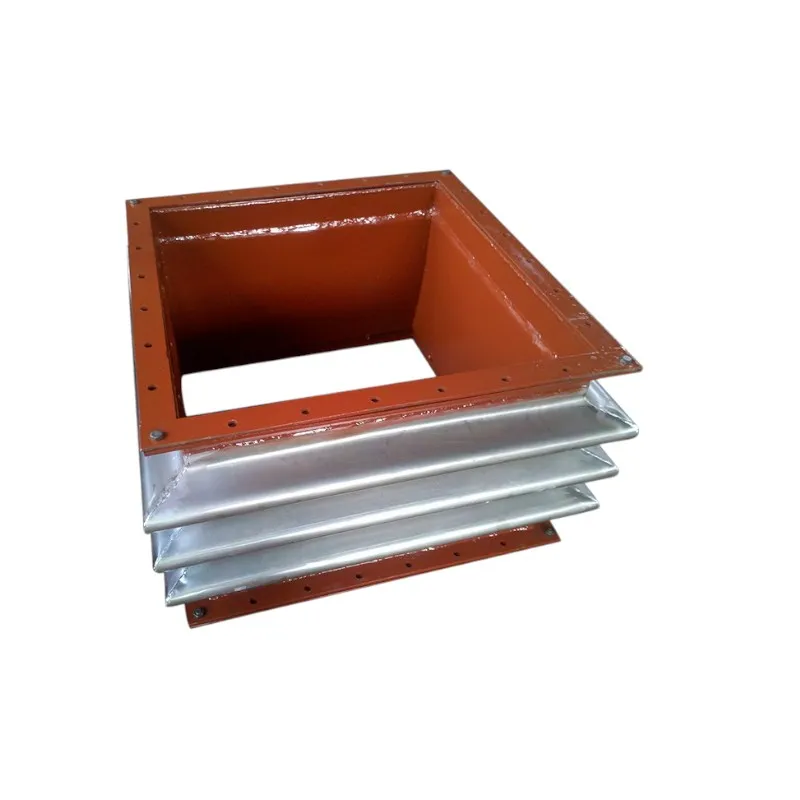
Fuid Tech Group Customized Soldered Expansion Joint Solution
Fuid Tech Group tackles the pain points of thermal expansion and contraction in industrial pipelines by introducing customized corrugated expansion joint solutions.The core skin material can be customized with silicone rubber, fluororubber, and other materials as needed, designed to withstand high temperatures and corrosive environments. It offers flexible structural options including square and circular shapes, perfectly suited for applications like flue ducts and ventilation systems.
With masterful craftsmanship and rigorous quality control, the expansion joint delivers exceptional compensatory performance and sealing capability. This ensures stable equipment operation, extends pipeline lifespan, and helps enterprises reduce costs while improving efficiency.


Final Thoughts
The statement that most pipeline problems come from the wrong expansion joint may sound exaggerated, but field experience shows there is truth behind it.
A non-metallic fabric expansion joint may look simple, but it must match temperature, pressure, media, movement, and connection requirements precisely.
At Fuid Tech Group, we help customers select expansion joints based on real operating conditions rather than assumptions. This approach reduces failure, maintenance cost, and downtime across industrial duct systems.