







How Does a Fire Sprinkler Valve Work? A Practical Explanation for Project Engineers and Buyers
February 16, 2026
In many fire protection projects, people focus on sprinkler heads, pumps, or pipe size. But the part that quietly controls the whole system is the sprinkler valve. When a fire starts, this valve decides how fast water moves, whether the alarm sounds, and whether the system reacts the way it should.
For contractors and distributors working on projects across South America and other developing markets, understanding how a fire sprinkler valve works is not theory. It directly affects installation quality, system reliability, and future maintenance.
At Fuid Tech Group, we often find that customers know they need a sprinkler valve, but they are not always sure how it actually works inside. This article explains it in a simple and practical way.
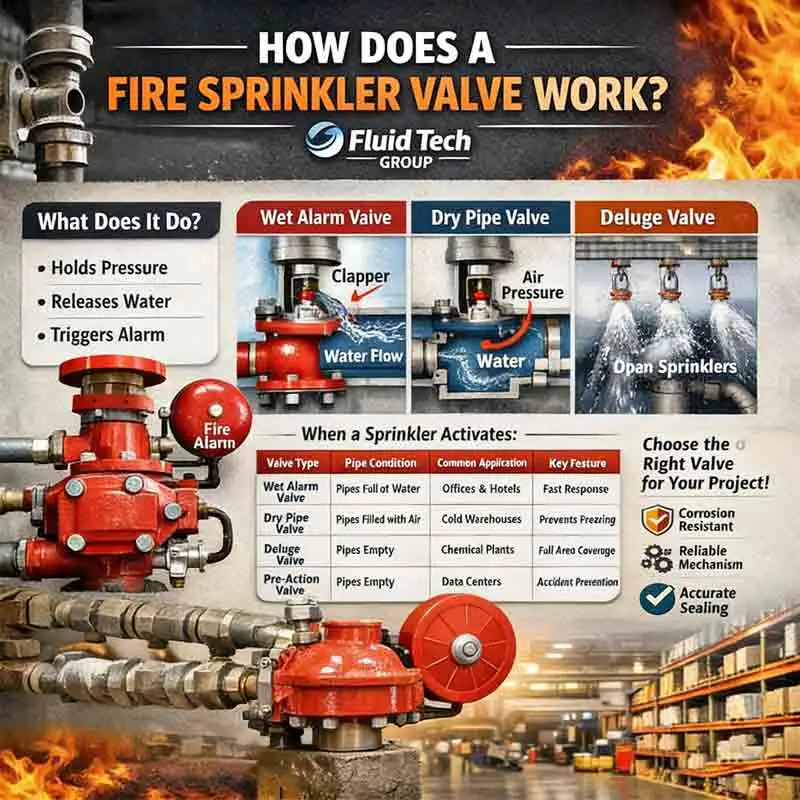
What Exactly Does a Fire Sprinkler Valve Do?
A sprinkler valve sits between the water supply and the sprinkler network. During normal conditions, it holds water back under pressure. When a sprinkler head opens because of heat, the valve reacts to the pressure change and allows water to enter the system.
At the same time, it also sends a signal to the alarm device.
So this valve has three jobs:
- Hold pressure during standby
- Release water quickly when a sprinkler activates
- Trigger the alarm system
Without this valve, the sprinkler system cannot work in a controlled way.

The Most Common Type: Wet Alarm Valve
In buildings where temperatures stay above freezing, the system uses a wet alarm check valve.
Here is what happens inside:
The pipes are already full of water. Pressure exists on both sides of the valve clapper, so the valve stays closed.
When a fire heats a sprinkler head, the glass bulb breaks. Water starts flowing out of that sprinkler. This creates a pressure drop in the pipeline.
The pressure difference lifts the clapper inside the valve. Water then moves freely into the sprinkler network. A small amount of water also flows into the alarm line and activates the water motor gong or pressure switch.
There is no electricity involved. Only water pressure and simple mechanical movement.
This is why wet systems respond very fast and remain highly reliable.
How a Dry Pipe Valve Works in Cold Areas
In warehouses, parking garages, or cold regions, water inside pipes can freeze. In these places, engineers use a dry pipe valve.
The pipes do not contain water during standby. They contain compressed air.
Water stays behind the valve. Air pressure keeps the valve closed.
When a sprinkler opens, air escapes first. The air pressure drops quickly. Water pressure then pushes the valve open. Water fills the pipeline and reaches the sprinkler head.
This process takes a little more time than a wet system, but it prevents serious freezing damage.
Deluge Valve for High-Risk Areas
Deluge systems work in a different way. You can find them in chemical plants, fuel storage sites, or power stations.
All sprinkler heads stay open. The pipes are empty.
A separate fire detection system controls the valve. When detectors sense fire, they send a signal to open the deluge valve.
Water rushes into the pipeline and sprays from all sprinkler heads at the same time.
This type of system aims to control fire in the shortest possible time over a large area.
What Happens Inside the Valve When a Sprinkler Opens?
No matter which fire sprinkler valve types of valve you use, the sequence is similar:
- Heat breaks a sprinkler head
- Pressure inside the pipeline changes
- The valve senses this imbalance
- The clapper or diaphragm moves
- Water flows into the system
- The alarm device activates
This entire process depends on pressure difference. That is why machining accuracy and sealing quality inside the valve are very important.
Problems Caused by Choosing the Wrong Valve
On many job sites, issues do not come from sprinkler heads. They come from valve selection.
Common mistakes include:
- Installing wet valves in areas that can freeze
- Using valves with pressure ratings lower than system demand
- Poor sealing that causes slow pressure loss
- Internal corrosion due to low-quality materials
These problems often appear months after installation, when the project is already handed over.
Comparison of Different Fire Sprinkler Valves
| Valve Type | Pipe Condition During Standby | How It Activates | Where It Is Commonly Used | Main Feature |
| Wet Alarm Valve | Pipes full of water | Sprinkler head breaks from heat | Offices, hotels, hospitals | Fast response, simple structure |
| Dry Pipe Valve | Pipes filled with air | Air pressure drops after sprinkler opens | Warehouses, garages, cold areas | Prevents freezing inside pipes |
| Deluge Valve | Pipes empty | Fire detection system signal | Chemical plants, fuel storage, power plants | Covers large area instantly |
| Pre-action Valve | Pipes empty | Detection signal + sprinkler action | Data centers, museums, libraries | Reduces risk of accidental discharg |
Why Valve Quality Matters in Real Projects
In many South American projects, valves face humid air, unstable water quality, and long transport times. Once installed, maintenance may not happen often.
This means the valve must:
- Resist corrosion
- Keep stable sealing performance
- Have accurate internal machining
- Use reliable internal components
A low-quality valve may look fine from outside, but problems start inside after some time.
At Fuid Tech Group, we focus on these internal details because they decide whether the valve will still work properly years later.
Final Thoughts
A fire sprinkler valve does not look complex, but it controls the most important action in the whole fire protection system. It reacts to pressure changes, releases water, and triggers alarms without any electrical power.
When you understand how it works, you can choose the correct type for each environment and avoid many common project problems.
For contractors, distributors, and engineers who want reliable fire protection components, selecting the right valve is as important as choosing the right pipe or pump.