







What Is a Deluge Valve in a Fire Fighting System?
marzo 3, 2026
In many industrial fire scenarios, speed matters more than anything else. When a fire spreads across a wide area, the system cannot wait for heat to activate individual sprinklers one by one. It must release a large volume of water immediately.
This is where the deluge valve becomes essential.
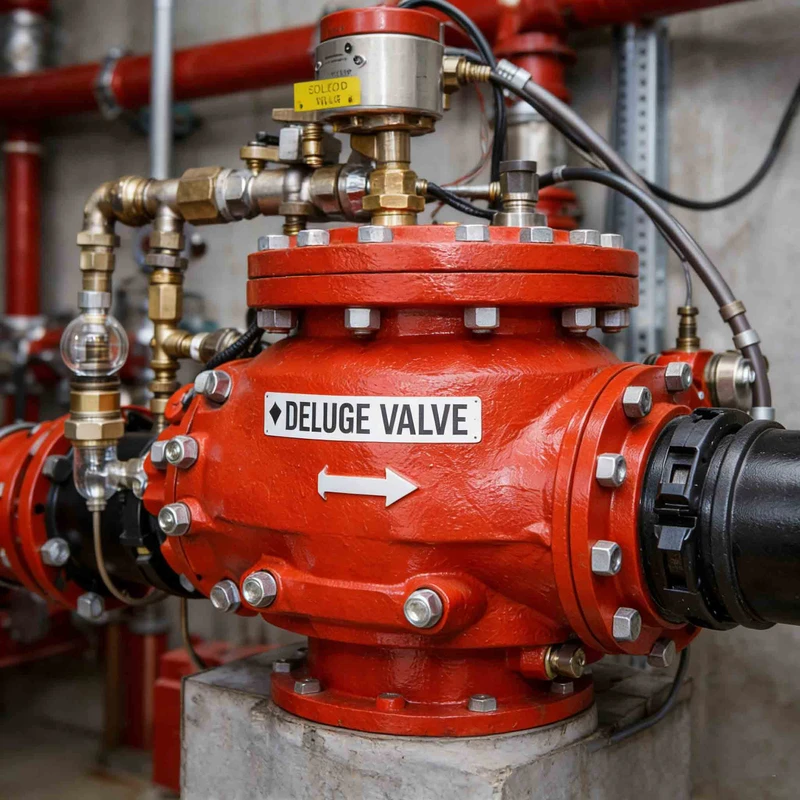
A válvula de diluvio contra incendios controls water flow into a deluge sprinkler system. Unlike standard sprinkler systems that open only at heated points, a deluge system releases water from all open nozzles at the same time. The valve acts as the main control gate that makes this rapid discharge possible.
For engineers, contractors, and distributors working in regions such as South America, understanding the role of the deluge valve helps in designing systems for high-risk environments like power plants, chemical storage areas, aircraft hangars, and fuel facilities.
How a Deluge Valve Works
A deluge valve stays closed under normal conditions. Water is present at the valve inlet, but it does not enter the sprinkler piping.
The valve connects to a detection system. This detection system can be:
- Smoke detectors
- Heat detectors
- Flame detectors
- Manual emergency release
When the detection system senses fire, it sends a signal to release pressure from the top chamber of the deluge valve. Once this pressure drops, the valve opens fully.
Water then rushes into the piping network and discharges from every open nozzle at the same time.
This design allows full-area fire suppression within seconds.

Why Standard Sprinkler Valves Are Not Enough
In ordinary buildings, a wet pipe sprinkler system works well. Each sprinkler head reacts to heat and opens individually.
But in special hazard areas, this method is too slow.
Consider places where:
- Flammable liquids are stored
- Fire can spread across the floor instantly
- Explosions are possible
- Equipment surfaces heat up rapidly
Waiting for heat to reach each sprinkler head wastes critical time.
A sistema de válvula de diluvio contra incendios keeps all nozzles open. The deluge valve controls when water is released. Once activated, the system floods the entire hazard zone.
Main Components Connected to a Deluge Valve
A deluge valve does not work alone. It forms part of a larger control assembly.
Key components include:
- Fire detection system
- Control panel
- Solenoid valve or pneumatic release
- Manual emergency station
- Manómetros
- Alarm devices
These parts work together to ensure the valve opens only when needed, but opens instantly when required.
This coordination reduces false discharge while guaranteeing fast response during real fire events.
Where Deluge Valves Are Commonly Installed
Deluge systems are used in high-risk industrial and commercial areas.
Typical applications include:
- Oil and gas facilities
- Plantas de transformación química
- Power generation stations
- Aircraft hangars
- Transformer rooms
- Fuel storage depots
- Conveyor belt systems
In these environments, fire spreads fast and covers large surfaces. A localized sprinkler response cannot control it effectively.
Advantages of Using a Deluge Valve System
Deluge valves offer several practical benefits in fire fighting design.
- Immediate full-area water discharge
- Fast fire control in high-hazard zones
- Integration with advanced detection systems
- Reduced dependency on heat-activated sprinklers
- Strong compliance with fire safety standards
For project designers, this means higher safety levels in locations where traditional systems fall short.
Comparison: Deluge System vs Wet Pipe Sprinkler System
| Característica | Deluge System | Wet Pipe Sprinkler System |
| Sprinkler nozzle status | Always open | Closed, heat-activated |
| Water in sprinkler pipes | No | Sí |
| Activation method | Detection system triggers valve | Heat opens individual sprinklers |
| Discharge pattern | Entire area at once | Only near fire source |
| Suitable for high-hazard areas | Sí | Limited |
| Risk of accidental discharge | Low with proper detection | Very low |
| Response speed | Extremely fast | Gradual |
Consideraciones sobre la instalación y el mantenimiento
Proper installation determines how well a deluge valve performs.
Installers must ensure:
- Correct connection to detection lines
- Proper pressure settings in the control chamber
- Clean water supply to avoid blockage
- Regular functional testing of release mechanisms
- Clear drainage for system testing
Routine inspection is important. Dust, corrosion, or debris can affect small pilot lines and solenoid valves that control the main valve.
Regular testing ensures the valve opens smoothly when needed.
Why Deluge Valves Matter in Modern Fire Protection Design
Fire risks in industrial facilities continue to increase due to the presence of fuels, chemicals, and high-energy equipment. Engineers cannot rely on slow or localized suppression methods in these environments.
The deluge valve provides a simple but powerful solution. It holds back water under pressure and releases it across the entire hazard zone within seconds.
This approach limits fire spread, protects equipment, and improves safety for personnel.
Final Thoughts
A válvula de diluvio is not just another valve in the pipeline. It is the control point of one of the fastest fire suppression methods available.
For contractors, system designers, and distributors, understanding its function helps in selecting the right equipment for high-risk projects.
En Grupo Fuid Tech, we supply reliable deluge valve solutions designed for demanding fire fighting applications. Choosing the right valve today ensures faster response and better protection when emergencies occur.