






How Can A Rotary Check Valve Accurately Control The Flow Direction Of The Medium Without Manual Operation? I Was Shocked!
February 24, 2026
In a fire protection system, water must travel in one direction only. From the source to the sprinklers, hydrants, or standpipes. If water flows backward, the system loses stability. Pressure changes. Equipment suffers. In some cases, the system fails when a fire breaks out.
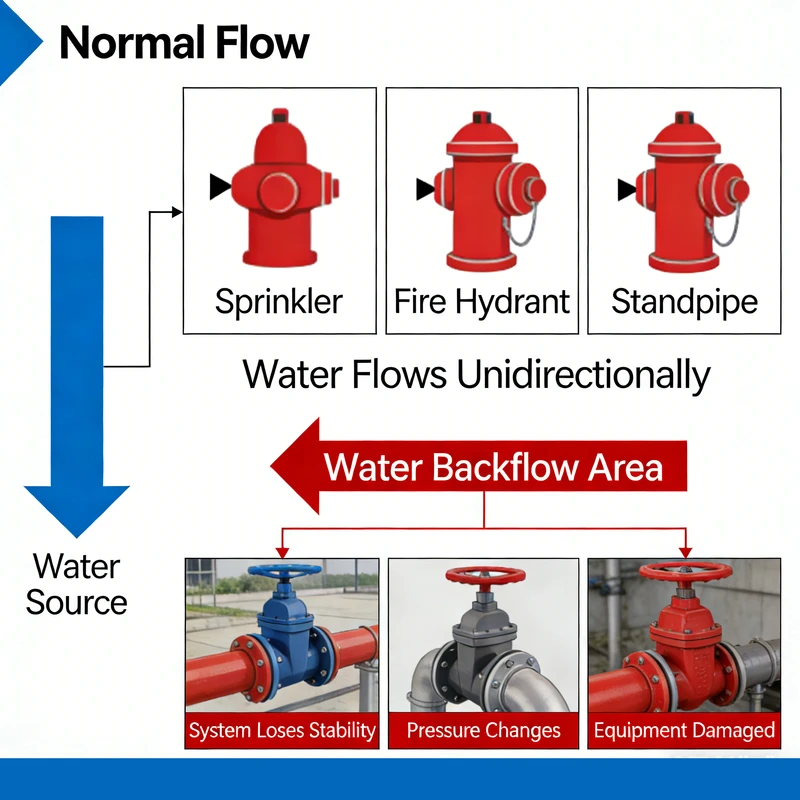
This is the real reason check valves exist in fire pipelines.
Many project drawings show them as small symbols between pumps, alarm valves, and supply lines. On site, however, experienced engineers treat check valve with strainer as protection devices for the whole system, not just simple fittings.
Across warehouses, factories, and commercial buildings in South America, inspection teams often trace fire system problems back to missing, incorrect, or poor-quality check valves.
This article explains why fire protection systems require check valves, where they are installed, and what risks they prevent.
The Basic Function of a Check Valve in Fire Pipelines
A check valve allows water to move forward and stops it from moving backward. It works automatically by water pressure. No manual operation. No electrical control.
In a fire system, this one-way control protects:
- Fire pumps
- Alarm valves
- Pressure zones
- Municipal water supply
- Water storage tanks
When the pump starts, pressure rises quickly. When it stops, pressure can drop just as fast. Without a check valve, water returns in the opposite direction. This reverse flow creates instability inside the pipeline.
A properly selected check valve reacts immediately to these pressure changes and keeps the system stable.
What Happens If There Is No Check Valve?
Some installers think the system can work without it. In practice, problems appear sooner or later.
Pressure Loss in Sprinkler Lines
Reverse flow reduces the pressure that should remain in the sprinkler network. During a fire, sprinklers may discharge weak water flow.
Damage to the Fire Pump
Backflow can rotate the pump impeller in reverse. This damages bearings and internal parts.
Alarm Valve Malfunction
Alarm valves rely on pressure difference. Backflow confuses this balance. The alarm may fail or trigger at the wrong time.
Risk of Water Contamination
Fire pipelines often contain stagnant water. Without a check valve, this water can flow back into the city supply line. Many countries strictly prohibit this.
Water Hammer and Pipe Vibration
Sudden reverse movement of water creates shock waves. Over time, this damages joints, valves, and fittings.
These risks explain why check valves are mandatory in fire protection standards.
Typical Locations Where Check Valves Are Installed
Check valves protect different sections of the system depending on where they are placed.
| Installation Position | Why a Check Valve Is Needed |
| After fire pump outlet | Stop water returning into the pump |
| Before alarm valve | Maintain correct pressure direction for alarm operation |
| Connection to municipal supply | Prevent backflow contamination |
| Between different pressure zones | Avoid pressure interference between system sections |
| Outlet of water storage tank | Ensure water flows only toward the fire network |
Each position has a clear purpose related to system safety.
How Check Valves Work During a Fire Event
Under normal conditions, pressure on both sides of the valve stays balanced. The valve remains closed.
When a sprinkler opens:
- Pipeline pressure drops
- Water begins to move forward
- The check valve opens automatically
- Water flows to the fire area
When the pump stops or pressure changes, the valve closes instantly. This action requires no operator and no signal.

This automatic response is why Swing Check Valves are trusted in fire protection systems.
Types of Check Valves Suitable for Fire Systems
Not every check valve on the market is suitable for fire pipelines. Fire systems stay idle for long periods. The valve must still work perfectly after years without movement.
| Type of Check Valve | Main Advantage | Common Use in Fire System |
| Swing Check Valve | Simple structure, low resistance | Main pipeline and large diameters |
| Dual Plate Check | Fast closing, compact size | Pump discharge lines |
| Lift Check Valve | Strong sealing under pressure | High-pressure sections |
| Silent Check Valve | Reduces water hammer effect | Systems sensitive to pressure shock |
Material quality and internal coating are also important to prevent rust and sticking.
Problems Often Found During Inspection
Fire system inspections frequently reveal check valve issues such as:
- Valve disc stuck due to corrosion
- Slow closing that causes water hammer
- Internal wear that leads to leakage
- Wrong valve type installed for the pressure level
- Missing check valve after pump installation
These problems usually remain unnoticed until system testing or a real emergency.
Maintenance and Testing Recommendations
Although check valves work automatically, they still require inspection.
Good practice includes:
- Visual inspection every six months
- Monitoring pressure gauges during pump operation
- Listening for unusual noise when the pump starts or stops
- Checking for external leakage
- Replacing valves that show internal corrosion
Regular checks ensure the valve can move freely when needed.
Why Valve Quality Matters in Fire Protection
A fire check valve may remain unused for years. But during a fire, it must open and close without delay.
Low-quality valves often fail because:
- Internal parts rust and stick
- Sealing surfaces wear out quickly
- The body cannot handle pressure shock
- The valve closes too slowly
For this reason, fire protection projects should select check valves designed specifically for fire systems, not general water pipelines.
Conclusion
Fire protection systems require check valves because water must flow in the correct direction at all times. These valves protect pumps, maintain pressure balance, prevent contamination, and reduce the risk of hydraulic shock.
Although small in size, a check valve plays a major role in system reliability.
Correct selection, proper installation, and regular inspection ensure the fire system performs when it matters most.
At Fuid Tech Group, we manufacture fire-rated check valves designed for long idle periods and sudden operation under pressure. Combined with proper system design and testing, they help create fire protection pipelines you can trust in critical situations.