







How Does a Fire Sprinkler System Valve Work? A Practical Guide for Industrial Projects
February 17, 2026
Fire sprinkler systems save lives and protect property every day. Yet many project managers, contractors, and buyers do not fully understand the most critical part of the system—the fire sprinkler valve.
The valve is not just a pipe accessory. It is the control center of the entire sprinkler network. If the wet sprinkler alarm check valve fails, the system fails. Understanding how it works helps you choose the right products, avoid installation mistakes, and reduce future maintenance risks.

In this guide, Fuid Tech Group explains how a fire sprinkler system valve works, the main valve types used in projects, and how to select the right one for your system.
What Is a Fire Sprinkler System Valve?
A fire sprinkler valve controls the flow of water from the supply line into the sprinkler piping network. Under normal conditions, the valve keeps water ready but contained. When a fire occurs, the valve reacts automatically or manually to allow water to discharge through the sprinklers.
The valve also performs three important tasks:
- Maintains system pressure
- Prevents backflow or accidental discharge
- Sends alarm signals when water starts flowing
Because of these roles, the valve is usually installed in a valve room or riser assembly where technicians can inspect and test it easily.
How Does a Fire Sprinkler System Valve Work?
The working principle depends on the system type, but the logic is similar.
Under normal conditions, water pressure from the supply side pushes against the valve clapper or sealing mechanism. This pressure keeps the valve closed but primed. The piping network after the valve stays either filled with water (wet system) or filled with air (dry system).
When a sprinkler head opens due to heat:
- Pressure in the downstream pipe drops
- The pressure difference forces the valve to open
- Water flows into the sprinkler pipes
- The moving water triggers the alarm port
- Water discharges from the activated sprinkler head
This process happens automatically without electricity. The design relies on mechanical pressure balance, which makes the system highly reliable.
Main Types of Fire Sprinkler Valves and Their Working Logic
Different fire risks and climates require different valve designs. The most common types include wet alarm valves, dry pipe valves, deluge valves, and pre-action valves.
Wet Alarm Valve
This is the most common valve used in buildings, warehouses, and factories in warm regions.
- Pipes remain filled with water
- Valve opens when pressure drops after sprinkler activation
- Water motor gong or pressure switch sends alarm
- Wet systems are simple, reliable, and easy to maintain.
Dry Pipe Valve
Used in cold regions where water may freeze.
- Pipes are filled with compressed air
- Air pressure holds the valve closed
- When a sprinkler opens, air escapes first
- Valve opens and water enters the pipes
This design prevents freezing damage.
Deluge Valve
Used in high-risk areas such as chemical plants or fuel storage.
- Sprinkler heads remain open
- Valve opens when a detection system sends a signal
- Water floods the entire area at once
This provides rapid fire suppression.
Pre-Action Valve
Common in data centers, museums, and sensitive facilities.
Pipes contain air, like a dry syste
Valve opens only after two events: detection signal + sprinkler activation
Prevents accidental water damage
Comparison of Common Fire Sprinkler Valves
| Valve Type | Pipe Condition | Trigger Method | Typical Application | Advantage |
| Wet Alarm Valve | Filled with water | Sprinkler head opens | Warehouses, factories, commercial buildings | Simple, low maintenance |
| Dry Pipe Valve | Filled with air | Air pressure drops | Cold storage, unheated buildings | Prevents freezing |
| Deluge Valve | Empty pipes | Fire detection system signal | Chemical plants, fuel areas | Rapid full-area protection |
| Pre-Action Valve | Filled with air | Detection + sprinkler activation | Data centers, archives, museums | Avoids accidental discharge |
Why Valve Quality Directly Affects System Reliability
In many projects, buyers focus heavily on pipes and sprinkler heads but overlook the valve. This is a common mistake.
A poor-quality valve can cause:
- False alarms
- Leakage at the seat or gasket
- Slow response during fire
- Difficult maintenance due to corrosion
- System failure during pressure fluctuation
High-quality valves use precise machining, durable sealing materials, and corrosion-resistant coatings. These details determine whether the system works properly after years of standby.
At Fuid Tech Group, we see many replacement cases where the original valve failed not because of design, but because of poor material selection and manufacturing tolerance.
Installation Position and System Integration
Correct installation is as important as valve quality.
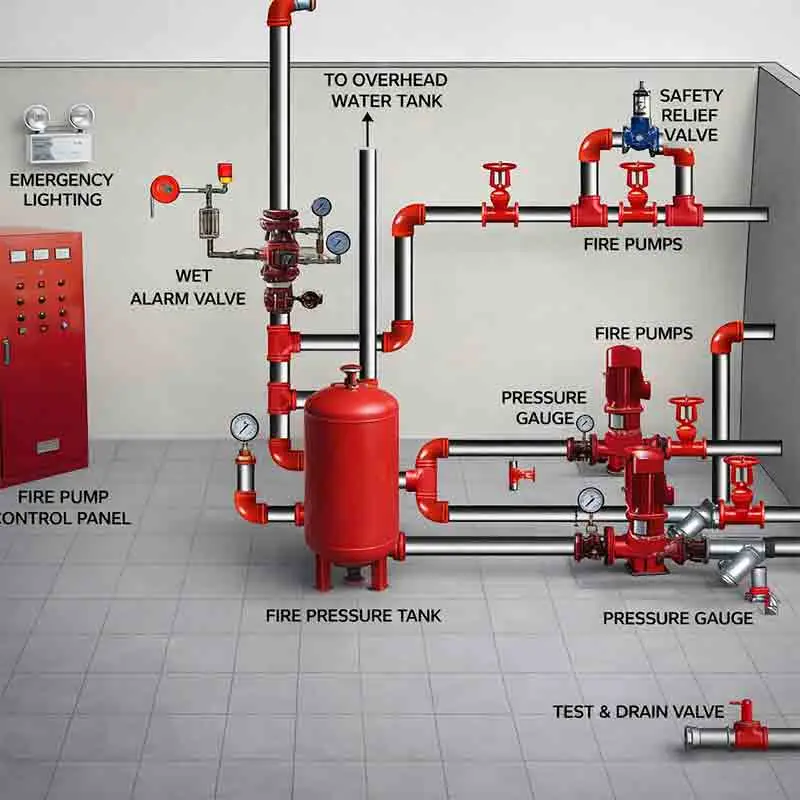
A fire sprinkler valve is usually installed with:
- Pressure gauges (inlet and outlet)
- Alarm line
- Test and drain valve
- Supervisory switch
- Check valve and isolation valve
This assembly allows technicians to test the valve regularly without activating the whole system. It also ensures local fire codes and international standards are met.
Improper installation often leads to incorrect pressure readings, alarm failure, or difficult maintenance later.
How to Choose the Right Fire Sprinkler Valve for Your Project
When selecting a valve, consider:
- Climate conditions (risk of freezing)
- Type of building and fire load
- Water supply pressure stability
- Maintenance capability on site
- Compliance with local fire standards
For many projects in South America, wet alarm valves are widely used due to warm climates and simpler maintenance. However, industrial plants or special storage facilities may require deluge or pre-action systems.
Understanding these differences helps avoid overspending or under-protecting the facility.
Final Thoughts
A alarm valve fire sprinkler system is more than a control device. It is the heart of the fire protection system. Its working principle is based on simple pressure mechanics, but its reliability depends on precise design, material quality, and correct installation.
Choosing the right valve type ensures the sprinkler system reacts instantly when needed and remains stable for years without trouble.
At Fuid Tech Group, we supply fire sprinkler valves and pipe fittings designed for long-term reliability in industrial and commercial fire protection projects worldwide. If you are planning a new system or upgrading an existing one, understanding how the valve works is the first step toward a safer project.