







Can a Leaking Valve Cover Gasket Cause a Fire? A Practical Industry View
January 27, 2026
In many mechanical and industrial systems, sealing components rarely attract attention. They are simple, low-cost parts, and they usually sit out of sight. Valve cover gaskets fall into this category.
However, maintenance teams often raise a serious question after incidents or inspections: can a leaking valve cover gasket cause a fire?
From an industry perspective, the answer depends on operating conditions, but the risk is real and should not be ignored.
At Fluid Tech Group, we work with fluid control and sealing components used in demanding environments, including cooperation with professional fire protection supply company partners that focus on industrial safety systems. This article looks at the issue from a practical standpoint rather than a theoretical one.
What Happens When a Valve Cover Gasket Starts to Leak
A valve cover gasket seals the joint between the valve cover and the engine or equipment housing. Its main purpose is to keep lubricating oil inside the system while allowing for thermal expansion and vibration.
Over time, gasket materials age. Heat cycles harden rubber. Continuous vibration reduces elasticity. Chemical exposure weakens the structure. When this happens, small leaks appear.
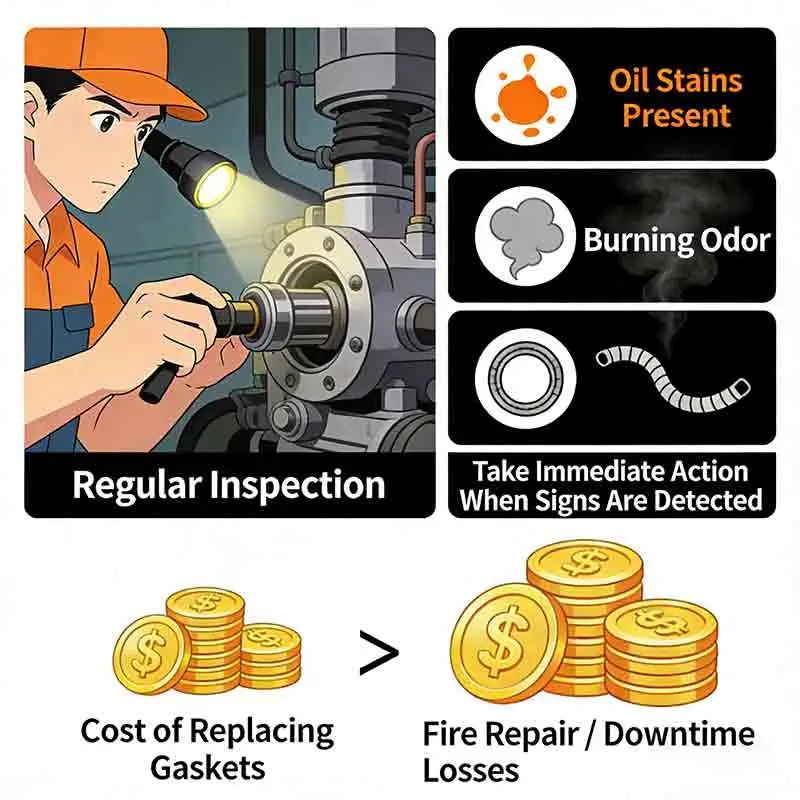
In the early stage, leakage is often minimal. Oil residue builds up slowly. There may be a faint smell during operation. These signs are easy to miss in busy industrial settings.
The problem is not the leak itself, but where the leaked fluid goes next.
Can a Leaking Valve Cover Gasket Cause a Fire?
In isolation, a leaking valve cover gasket does not create flames. Fire risk increases when leaked oil reaches hot surfaces or ignition sources.
Many engines and industrial units operate with surface temperatures high enough to ignite oil. Exhaust manifolds, turbochargers, and heat exchangers are common examples. When oil drips onto these areas, smoke usually appears first. If leakage continues, ignition can follow.
In fire protection systems, similar risks exist when oil contamination reaches components such as a fire sprinkler alarm check valve or other pressure-sensitive devices. While these components are designed for water systems, surrounding machinery and auxiliary equipment may still expose leaked fluids to heat sources.
Environmental factors also matter. Poor ventilation traps heat and vapor. Dust and debris absorb oil and act as additional fuel. Electrical components nearby increase ignition potential.
This is why the question can a leaking valve cover gasket cause a fire cannot be answered with a simple yes or no. In the wrong conditions, a small leak can become a serious safety hazard.
Operating Conditions That Increase Fire Risk
Certain conditions make gasket-related fires more likely.
High operating temperatures accelerate gasket degradation and lower oil ignition thresholds. Equipment that runs continuously without shutdown allows leaks to develop unnoticed. Strong vibration loosens fasteners and worsens sealing gaps.
Improper gasket material selection is another factor. A gasket designed for moderate service may fail quickly in high-heat applications. Chemical incompatibility can cause swelling or cracking, leading to sudden leakage.
In many incidents, multiple factors combine. The gasket fails slowly, inspections are delayed, and operating conditions remain harsh.
Comparison of Common Valve Cover Gasket Materials
Different gasket materials respond differently to heat, pressure, and aging. The table below compares common options used in industrial and mechanical systems.
| Gasket Material | Typical Application | Heat Resistance | Long-Term Behavior | Fire Risk Impact |
| NBR Rubber | General machinery | Moderate | Hardens over time | Leak risk increases near hot parts |
| Silicone Rubber | High-temperature systems | High | Remains flexible | Reduced leakage when properly installed |
| Cork Composite | Older equipment | Low to moderate | Uneven compression | Higher long-term leak potential |
| Fiber Reinforced | Industrial engines | High | Stable under pressure | Depends on correct torque |
Material choice alone does not eliminate risk, but it strongly influences how leaks develop over time.
Why Inspection and Maintenance Matter More Than Cost
Most gasket-related fire incidents do not result from sudden failure. They develop gradually.
Regular inspection identifies oil residue, surface staining, or early gasket deformation. Addressing these signs early prevents escalation. Replacing a gasket is inexpensive compared to downtime, repairs, or fire damage.

Installation quality also matters. Uneven bolt torque causes localized leakage. Following torque specifications and tightening sequences improves sealing reliability.
These steps require time, but they reduce risk significantly.
In industrial plants, sealing failures are often discovered only after more serious system components are affected, including key fire fighting valves types used in emergency response systems.
The Role of Reliable Sealing Components
Consistent sealing performance depends on material quality, dimensional accuracy, and application suitability. Poor-quality gaskets may fit initially but fail quickly under real operating conditions.
At Fluid Tech Group, we focus on supplying sealing components designed for industrial reliability. Our experience with fluid systems helps customers select gaskets that match actual service conditions rather than nominal specifications.
This approach supports safer operation and longer service life.
Final Thoughts
So, can a leaking valve cover gasket cause a fire? In the right environment, yes. The gasket itself is a small part, but its failure can start a chain of events with serious consequences.
Understanding operating conditions, material behavior, and maintenance practices helps reduce that risk. In industrial systems, sealing components deserve more attention than they usually receive.
Preventing fires often starts with preventing small leaks.